
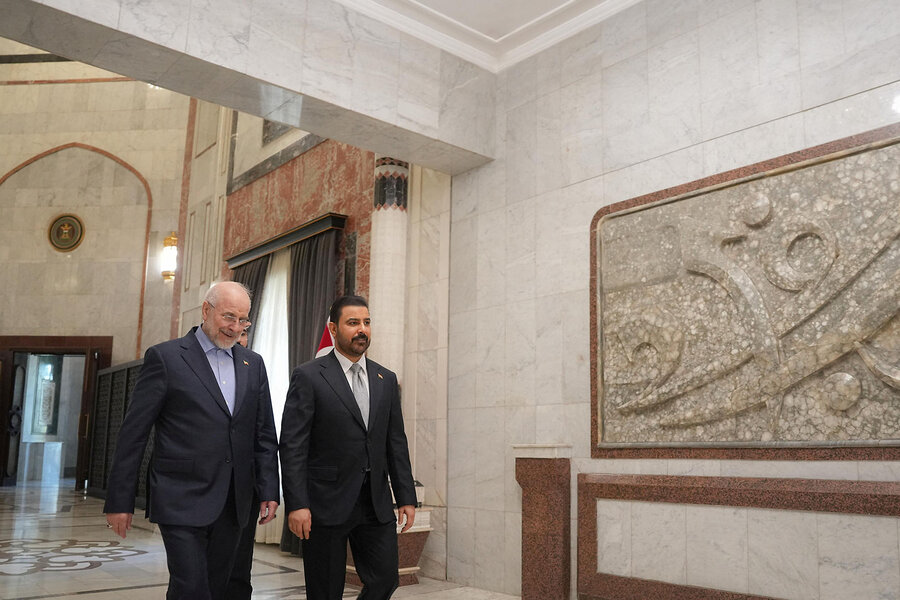
As the U.S. amplifies its economic sanctions against Iran, Tehran is increasingly turning to Iraq as its primary escape route. This neighboring country, where Iran has exerted significant political and economic influence over the past two decades, is positioned as a vital economic lifeline for the Iranian regime. To fortify this connection, Iran is ramping up its investments and military presence through local militias and financial networks.
## Iran’s Growing Influence in Iraq
Iraq’s political landscape is under pressure as its Prime Minister, Ali al-Zaidi, advocates for disarmament of the various Iranian-backed militias. Having been publicly supported by U.S. President Donald Trump, Zaidi faces a complex task; he must dismantle these groups while balancing Iraq’s fragile sovereignty amidst external pressures. As U.S. sanctions aim to disrupt Iran’s financial lifelines, Baghdad risks being sidelined amid intensifying U.S.-Iran tensions.
Iran’s dependency on Iraq as an economic conduit is becoming increasingly apparent. Observers note that the removal of Iran’s financial networks in Iraq is contingent upon dismantling these powerful militias that operate within the country. U.S. Treasury Secretary Scott Bessent recently described the sanctions as a “sustained campaign” aimed at isolating Iran economically, stressing that nations engaging with the regime would face similar isolation. However, experts cast doubt on the effectiveness of these measures, especially given the complexities of Iraq’s political and economic landscape.
## Challenges of Implementing Sanctions
Iraq’s oil wealth and its cash-oriented economy complicate U.S. efforts to curtail Iranian influence. Corruption is rampant, and many Iraqi citizens do not trust formal banking systems, which undermines Prime Minister Zaidi’s attempts to enforce financial regulations. Analysts note that sanctions may have limited impact if there remains a clandestine culture of burying money underground rather than engaging with banks. With various Iranian-aligned factions working urgently to convert their assets into cryptocurrency, the challenges for both the Iraqi government and U.S. sanctions become even more pronounced.
The U.S. has long struggled with its financial policy concerning Iraq’s oil revenues, which are managed through the Federal Reserve Bank in New York. Various local banks have been implicated in facilitating funds to Iranian militias, prompting Washington to take increasingly assertive actions, including financial sanctions and the suspension of U.S. currency shipments to Iraq. Yet, after Zaidi’s promises of enhanced financial oversight, the U.S. resumed its dollar shipments, reflecting a precarious balancing act.
## Militias and Regional Dynamics
The Iraqi government is pressured to assert control over militias that threaten its Gulf neighbors and U.S. interests. Ali al-Zaidi’s coalition, representing a diverse mix of Iraqi factions, is itself a tapestry of divergent interests, from nationalism to outright allegiance to Iran. Certain Shiite groups, such as the Popular Mobilization Units (PMUs) that emerged to fight ISIS, have become quasi-state entities while other militias operate independently under Iranian command, complicating any disarmament effort.
Reports suggest that the Iranian Revolutionary Guard Corps (IRGC) is playing a more hands-on role in managing these militias and their funding strategies. As IRGC commanders secure their influence through a mix of coercion and financial support, these militia networks become entrenched in Iraq’s economic strata, securing resources needed for Iranian dealings.
## The Future of Iraq’s Sovereignty
Prime Minister Zaidi has set a deadline for militias to either disarm or integrate into the state apparatus, aligning with the withdrawal of U.S. combat troops. The hope is that with the exit of foreign troops, the rationale for Iranian-backed militias would dissipate. However, experts warn that such disarmament, particularly of hardline factions, remains unlikely. Iran’s vested interests in these militias render them a long-lasting part of Iraq’s political scenery.
In conclusion, while Iraq remains a complex battlefield of influence between local ambitions and Iranian oversight, the intertwining of these militias with regional economics poses a significant challenge to its sovereignty. Establishing a stable and independent Iraq will require not only addressing the power of these militias but also reshaping its financial and political relationships with Iran and the broader international community.