
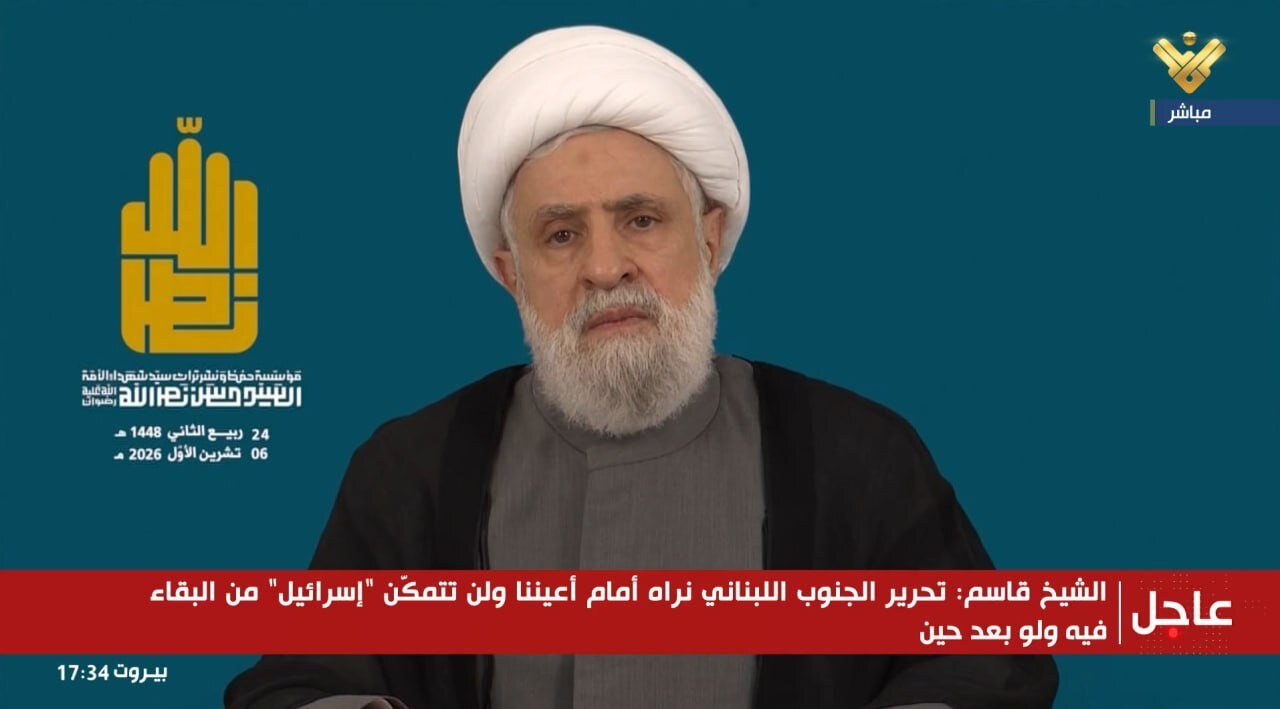
In a recent speech, Hezbollah Secretary General Sheikh Naim Qassem emphasized that the liberation of southern Lebanon is imminent. He asserted that Israeli forces will ultimately fail in their attempts to uphold an illegal occupation, regardless of the time frame involved.
Withdrawal as a Precondition for Peace
During a televised address in Beirut, Sheikh Qassem set clear expectations for any regional resolutions, stating that the complete withdrawal of Israeli troops is non-negotiable. He firmly rejected any American-backed proposals that demand disarmament from Hezbollah while foreign military presence continues in Lebanon. His remarks underline Hezbollah’s commitment to resisting external pressures that undermine Lebanese sovereignty.
The speech took place at a ceremony where the Foundation for the Preservation and Dissemination of the Heritage of Sayyed Hassan Nasrallah was officially launched. This institution, approved by Hezbollah’s Shura Council, aims to archive and publish pivotal historical speeches and works of the late leader, who has been instrumental in shaping the movement over the past three decades. Sheikh Qassem noted that this collection will serve as a vital resource for scholars and future generations striving for justice and liberation.
Core Principles of Resistance
In his address, Sheikh Qassem articulated six foundational pillars that define the Hezbollah movement’s ideology and operational strategies under the leadership of Sayyed Nasrallah. Central to their philosophy is a steadfast commitment to genuine Muhammadi Islam as a guiding framework for societal governance and dignity.
The second pillar emphasizes nurturing a culture of jihad rooted in the sacrifices made during Karbala, embodying the teachings of Imam Hussein (AS) and Lady Zainab (SA). The third pillar is focused on the principle of Wilayah, which extends the concept of divine authority from the Twelve Imams through to present leadership figures like Imam Khomeini and Grand Ayatollah Seyyed Ali Khamenei. Sheikh Qassem also discussed the fourth pillar as fostering a spiritual connection to Imam Mahdi, which inspires faith in the inevitable triumph of justice.
The fifth pillar emphasizes the need for unity between Islamic factions and local communities, while the sixth pillar calls for active military defense against foreign aggression. Sheikh Qassem paid tribute to influential Resistance leaders and noted their impact on strengthening military resilience in the face of foreign interventions.
Rejecting External Pressures
Sheikh Qassem assessed the current situation on the Lebanese front, asserting that Israeli military actions—intensified by U.S. backing—have failed to weaken the Resistance’s resolve, nor have they succeeded in establishing a permanent foothold in Lebanon. He asserted that the group could only continue its mission as long as hostile actions persist, addressing attempts at imposing unilateral concessions on Hezbollah.
He strongly dismissed any diplomatic proposals that would require Hezbollah to disarm while the Israeli presence remains, placing the responsibility for peace squarely on the occupying forces to cease their violations and withdraw. He stated that the resolution begins with Israel’s retreat and acknowledged the joint aggression of Israel and the U.S. as the core issue leading to regional instability.
Unity at Home and Solidarity Abroad
In his speech, Sheikh Qassem also highlighted the importance of regional solidarity by praising the efforts of the Iraqi people and their resistance against foreign occupation. He noted that Iraq’s victory against both U.S. forces and ISIS demonstrates that resilient societies can drive out foreign occupiers.
On the topic of internal Lebanese affairs, he expressed a willingness to engage in dialogue for economic reform, job creation, and the protection of public funds, provided such talks are free from American influence. He concluded with a message of support to Palestinians facing oppression, asserting that despite the challenges ahead, victory will ultimately belong to those who stand firm in defending their homeland.