
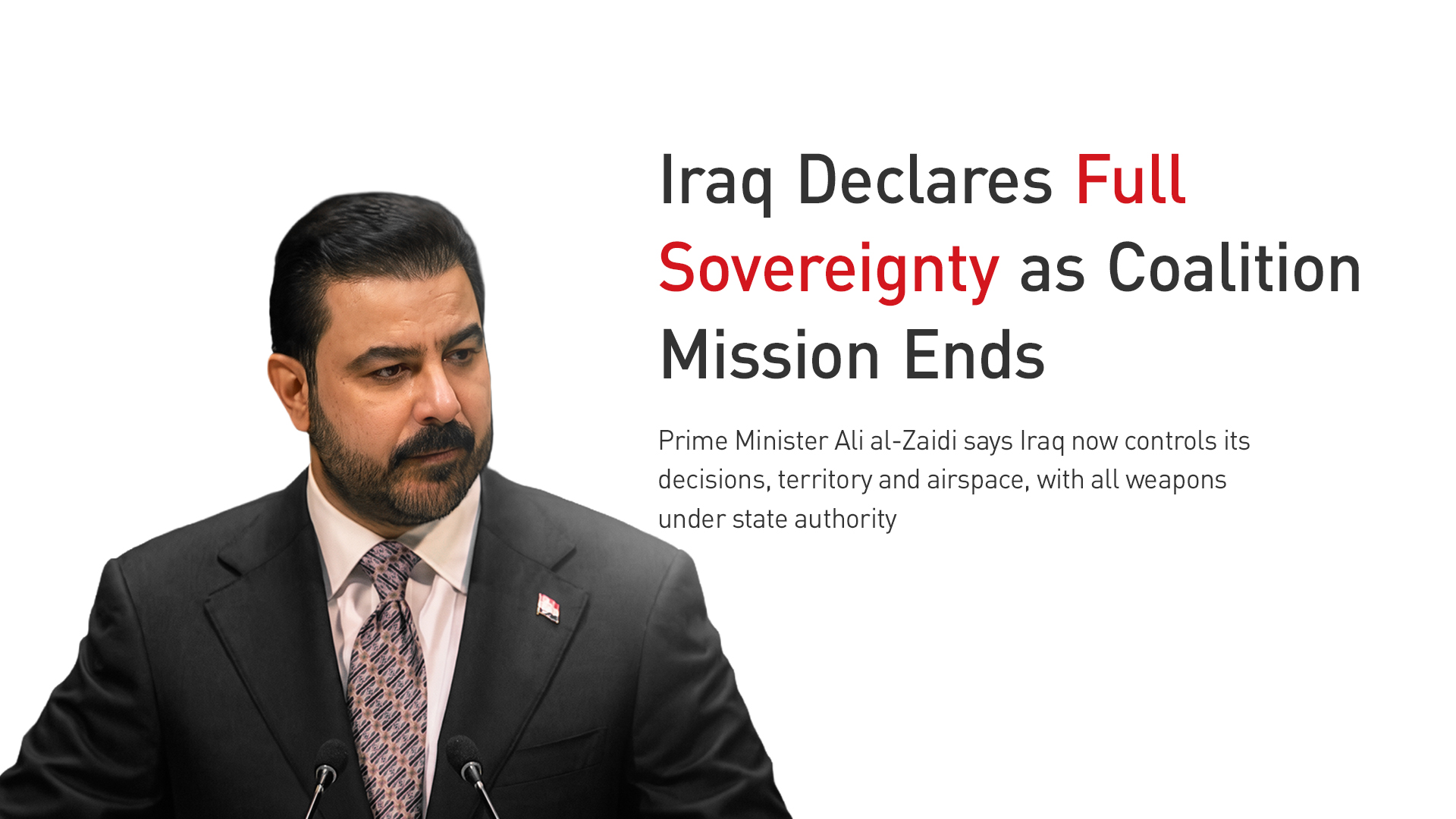
Iraqi Prime Minister Ali Faleh al-Zaidi recently addressed the nation, announcing a significant milestone for Iraq’s sovereignty. As the country embarks on a new chapter following the withdrawal of the international coalition’s military forces, he emphasizes the necessity of a balanced foreign policy and the importance of keeping security decisions centralized under state authority.
Emphasizing Iraq’s Full Sovereignty
During a National Day address, Al-Zaidi proclaimed that Iraq has officially transitioned into a phase of complete sovereignty. This development marks the conclusion of military operations by the U.S.-led coalition, which formally ended on September 30. “We are a state that possesses its decision,” he affirmed, underscoring Iraq’s renewed control over its territory and airspace, while ensuring that all arms remain under the authority of the commander-in-chief of the armed forces. This assertion highlights the government’s commitment to national integrity and security.
Balanced Foreign Policy and Regional Security
Al-Zaidi also articulated Iraq’s intention to pursue a balanced foreign policy rooted in national interests, mutual respect, and collaborative efforts with other nations. He highlighted Baghdad’s efforts to navigate regional conflicts carefully, positioning Iraq as a mediator rather than a participant in such disputes. The prime minister’s remarks stressed the importance of preserving national sovereignty and security amidst a complex geopolitical landscape. “We are working to shield Iraq from the repercussions of regional strife,” he stated, emphasizing the importance of independent decision-making.
The Role of National Unity
Moreover, Al-Zaidi articulated that the nation’s ability to progress beyond its historical crises hinges on social cohesion and unity. He appealed for all Iraqi citizens to embrace a shared vision for the future, emphasizing that the country must be inclusive and supportive of its diverse populace. Reflecting on Iraq’s struggles since 2003, he recognized the sacrifices made in the pursuit of a democratic state and a permanent constitution that allows for the peaceful transfer of power. Al-Zaidi believes that national unity is paramount to moving beyond the political instability that has historically plagued the nation.
Economic Development and Future Aspirations
Beyond addressing security and governance, the prime minister outlined plans to bolster Iraq’s economic resilience through strategic diversification and international partnerships. Initiatives include the establishment of one million residential plots, the Development Road project, and a commitment to combating corruption. By positioning Iraq as a vital trade route and energy corridor between East and West, Al-Zaidi aims to create job opportunities and foster private-sector growth. He emphasized that the national interest will always take precedence, ensuring that citizens remain at the heart of government policies and development initiatives.
In summary, Prime Minister Al-Zaidi’s address paints a hopeful picture of Iraq’s future, underscoring the importance of sovereignty, a balanced foreign policy, and unity among its citizens. As Iraq embarks on this new journey, the government’s focus will be on securing national interests, promoting economic development, and maintaining a secure environment for all its citizens.