
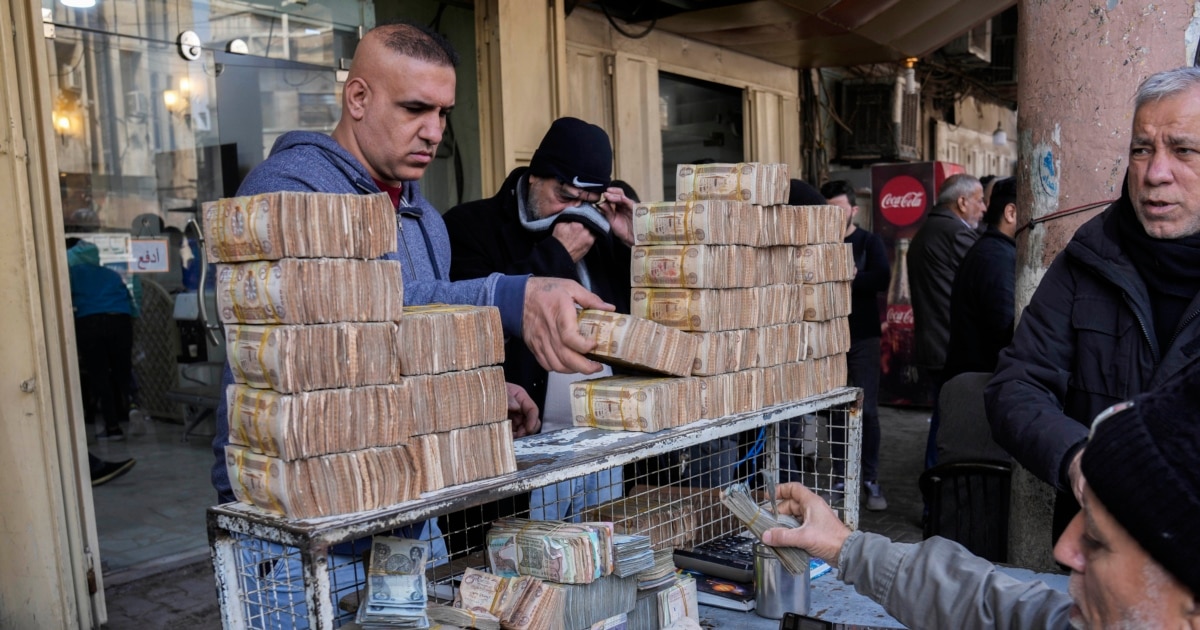
The Central Bank of Iraq has recently made a significant change to the official exchange rate of the Iraqi dinar against the U.S. dollar, a move that responds to current economic conditions and was suggested by the Council of Ministers. This shift raises questions about the implications for Iraq’s economy and the everyday lives of its citizens.
New Exchange Rate Details
As of Wednesday, the Central Bank will purchase U.S. dollars from the Ministry of Finance at a rate of 1,500 dinars per dollar, selling them to banks at 1,510 dinars. Banks, in turn, will sell dollars to the public at 1,520 dinars. This represents a significant increase from the previous rate, where the official selling rate to the public was set at 1,320 dinars per dollar, indicating a considerable devaluation of the Iraqi currency.
Despite these changes, the Central Bank assures that foreign currency reserves remain robust enough to meet various demands, including financing trade and providing dollars for international travel or transactions. According to Mazhar Mohammed Salih, the financial adviser to the Iraqi prime minister, the stability of the dinar heavily relies on the availability of foreign currency and the nation’s ability to sustain its foreign trade.
Potential Economic Concerns
Salih further elaborated that external factors could impact Iraq’s financial health. Regional conflicts and tensions, especially concerning oil transport through critical chokepoints like the Strait of Hormuz, could adversely affect oil revenues, the national budget, and the influx of foreign currency. He stressed that the government’s current fiscal measures are precautionary, as they aim to manage the foreign currency market effectively while trying to alleviate the effects of external economic shocks.
Addressing the public’s concern about the weaker dinar and rising prices, Salih mentioned that the government intends to continue funding essential services like food, medicine, and fuel. This commitment is crucial in maintaining citizens’ purchasing power despite the economic challenges posed by the devaluation.
Political and Public Response
The decision to change the exchange rate has elicited criticism from various members of the Iraqi parliament. Some lawmakers are actively gathering signatures to oppose this measure, prompting the parliament to postpone its regular agenda to discuss the exchange rate further. Following this, the session was adjourned, and Speaker Mohammed al-Halbousi called for an appearance by the governor of the Central Bank and the finance minister. Lawmakers want to understand the rationale behind the decision and its anticipated economic implications.
In the wake of the devaluation, there has been noticeable concern among the public, leading to disruptions in markets. Some shops and currency exchange offices in Baghdad and other provinces temporarily closed as reports indicated that the market exchange rate had surged to around 1,800 dinars per dollar.
Long-term Economic Strategy
Despite the immediate concerns, the Central Bank has expressed a belief that adjusting the dinar’s value may yield long-term advantages for the Iraqi economy. By making Iraqi products more competitive, this move could bolster domestic production and local industries. Additionally, it has the potential to attract investment in sectors beyond oil, thereby creating new job opportunities and promoting economic growth.
In summary, while the recent devaluation of the Iraqi dinar signals significant shifts in the economic landscape, it also highlights the challenges and uncertainties that lie ahead for both the government and its citizens. The interplay between monetary policy and fiscal measures will be crucial in navigating these turbulent waters.