
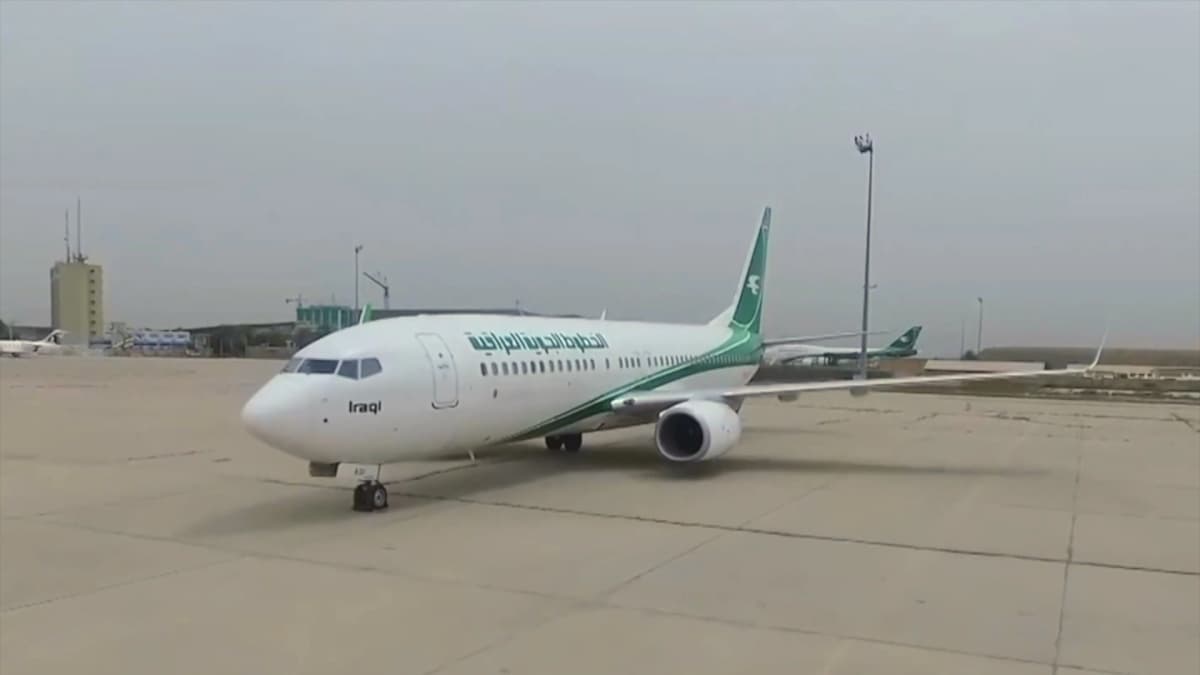
In a notable development in the Kurdistan Region, political factions aligned with Iran have expressed strong opposition to U.S. sanctions that have halted flights between Baghdad and Tehran. The situation has prompted significant political reactions within Iraq, with lawmakers discussing potential actions to address the crisis.
Iraqi Political Response to Flight Suspension
A lawmaker from the State of Law Coalition, Muna al-Ghurabi, emphasized the urgency of the matter, stating that the Iraqi Parliament will request an emergency session to summon key government officials over the flight suspension. She highlighted the need to investigate the economic repercussions of this decision on Iraq. During her communication with Rudaw, she asserted that the shutdown could have far-reaching impacts on the local economy.
Miqdad al-Khafaji, a member of the Hoquq Movement, which is politically affiliated with the Iran-backed Kata’ib Hezbollah, labeled the Iraqi government’s decision to stop flights as “unjust.” Al-Khafaji stressed the critical nature of Iranian support over recent years and positioned Iran as a vital ally in the fight against ISIS, thereby framing the suspension as detrimental to Iraq’s cooperation with Tehran.
Implications of U.S. Sanctions
The sanctions driving the flight halt stem from ongoing tensions between the U.S. and Iran, particularly relating to Iran’s influence in the region. The Iranian authorities officially suspended flights to Baghdad on Tuesday, rerouting services instead to the Shiite holy city of Najaf. The Iraqi government has not made an official statement regarding the suspension, leaving many in uncertainty about the future of travel between the two nations.
Reports indicate that privately-owned airport service handlers are now reluctant to provide support to Iranian airlines due to fears of facing U.S. sanctions. Consequently, this move has put additional pressure on airlines and inconvenienced travelers who rely on direct flights between these important destinations. The financial repercussions for Iraq could be significant, particularly if a large volume of travelers is diverted.
Continued Flights to Najaf
Despite the disruptions, Iranian state media reported that flights from Iran to Najaf remain scheduled as previously announced. This development may alleviate some concerns for travelers looking to visit Iran’s cultural and religious hubs while navigating the current restrictions.
As tensions persist over the flight ban, the interplay between Iraqi sovereignty and U.S. foreign policy continues to be tested. Iraqi officials claim that yielding to U.S. demands undermines Iraq’s claims of political independence. Moreover, any ongoing blockade could exacerbate regional tensions and complicate relations between Iraq, the U.S., and Iran.
In summary, the suspension of flights due to U.S. sanctions has elicited strong reactions from various Iraqi political factions. The political landscape appears poised for a significant debate in the coming days, highlighting the complex dynamics between Iraq, the U.S., and Iran. As the situation evolves, it will be critical to monitor how these tensions impact not only travel and trade but also the broader geopolitical context in the region.