
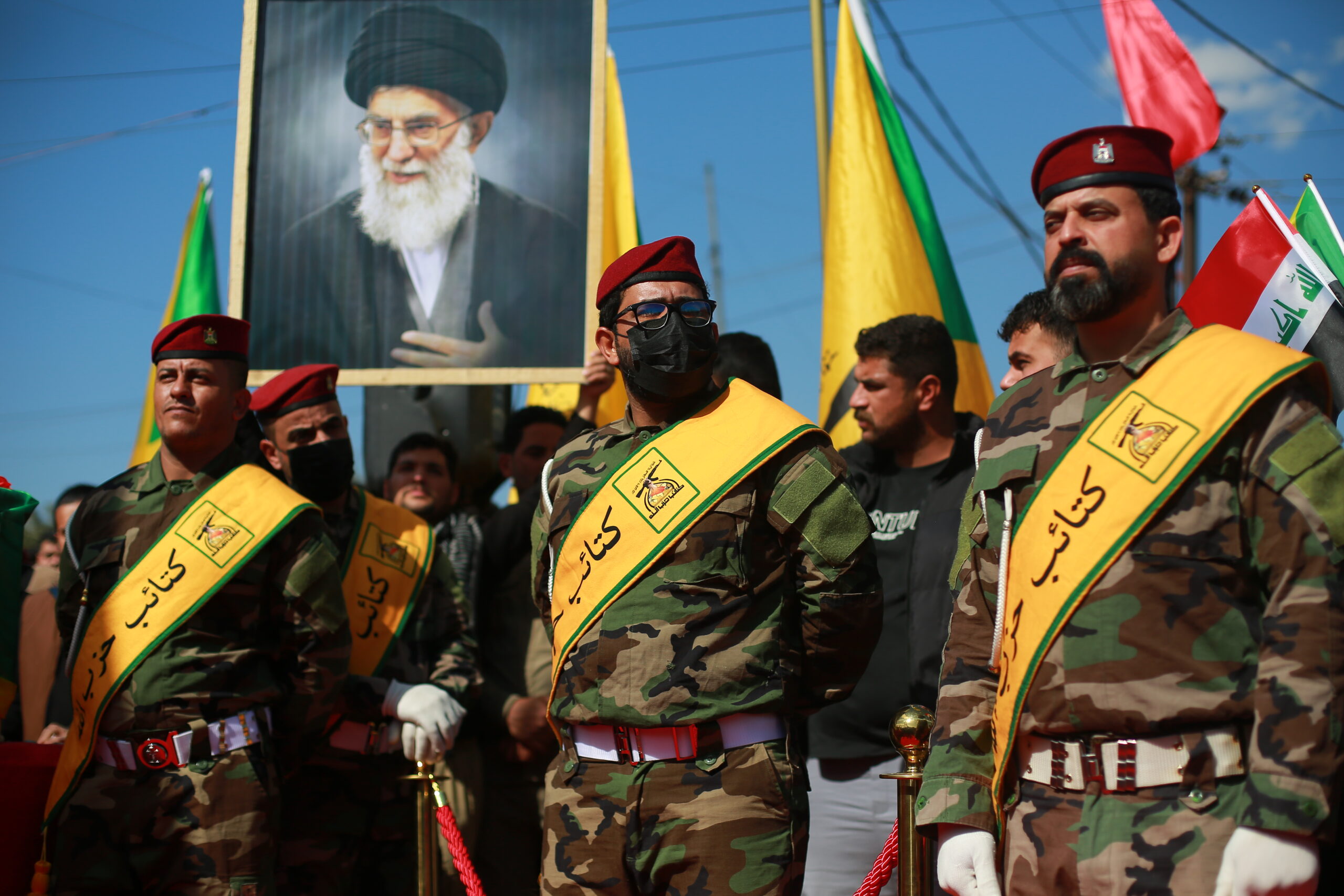
The recent transformation of Iran’s political structure under Supreme Leader Mojtaba Khamenei marks a distinct shift from decades of governance. This evolution has rippled through Tehran’s influence in Iraq, particularly affecting the operational capacity of Iraq’s militias. Historically, the Islamic Republic of Iran was architected by Ayatollah Ruhollah Khomeini (1979–1989), followed by Ali Khamenei (1989–2026) who consolidated power, allowing the Islamic Revolutionary Guard Corps (IRGC) significant sway over the nation’s affairs, including a substantial portion of its economy. However, under Mojtaba, the dynamics have altered significantly.
The Shift to Juntocracy
With the rise of Mojtaba Khamenei, the leadership seems to have transitioned from a theocratic framework to a form of juntocracy, where military officers play a central role in governance. Following the death of Ali Khamenei, Mojtaba found himself in a precarious position, particularly in light of the circumstances surrounding his father’s death in an Israeli strike. His ascension was significantly backed by IRGC support, which now seems to shape major state decisions, using the supreme leader’s title as a facade for their security control. This military-centric governance approach reshapes the political landscape in Iran and raises questions about its implications in regional matters, particularly in Iraq.
The Impact of Hard and Soft Power
Iran’s influence in Iraq is vast, rooted in both hard and soft power strategies. Post-2003, after the U.S. invasion, Tehran’s reach expanded significantly, with many Iraqi officials being either supporters of Iran or having lived there during exile. By establishing powerful militias like the Badr Corps and others, Iran has cultivated an army that functions independently of local authorities and often comes into conflict with Iraq’s prime minister. This militarized power has resulted in significant geopolitical complications for Iraq, with U.S. sanctions and military presence shaping factions and their actions.
On the soft power front, Iran has effectively intertwined religious influence with politics, endorsing leaders who align with its interests while undermining others. The importance of Iraqi Shiite clerics like Grand Ayatollah Ali al-Sistani contrasts with the Khamenei-led factions that present themselves as the authentic representatives of Shiite Islam. This dichotomy complicates the relationship between various Iranian-backed groups in Iraq, leading to an increasingly fractured militia landscape amid growing U.S. pressure.
Fragmentation Among Militias
The changing dynamics in Iran are leading to notable fragmentation within its affiliated militias in Iraq. Historically, these armed groups were united under Iran’s centralized authority, but the loss of Khamenei’s steady guidance has resulted in disparate factions. As the U.S. increases pressure on these militias to disarm, various camps have emerged. Some have begun to surrender weapons while others, like Kata’ib Hezbollah, remain adamant about maintaining their armed status. This divergence occurs within a context where factions face existential threats, navigating the political landscape not only for influence but for economic survival.
The evident splits among these groups create a precarious environment. The absence of a unified command may render them vulnerable to external pressures from the U.S. military and regional adversaries. The factions, once tightly coordinated under Iran’s watchful eye, are now revealing differing strategies on disarmament and political participation, a shift that could lead to further fragmentation.
In conclusion, Iraq’s militias find themselves at a crossroads, grappling with the implications of Mojtaba Khamenei’s leadership transition. Without a clear path forward, the risk of increased internal strife looms large, offering little room for reconciliation amid rising pressures. The interplay of military and political power in Iran not only shapes its domestic landscape but also reverberates throughout the Middle East, contributing to a complex web of alliances and conflicts that continue to evolve.