
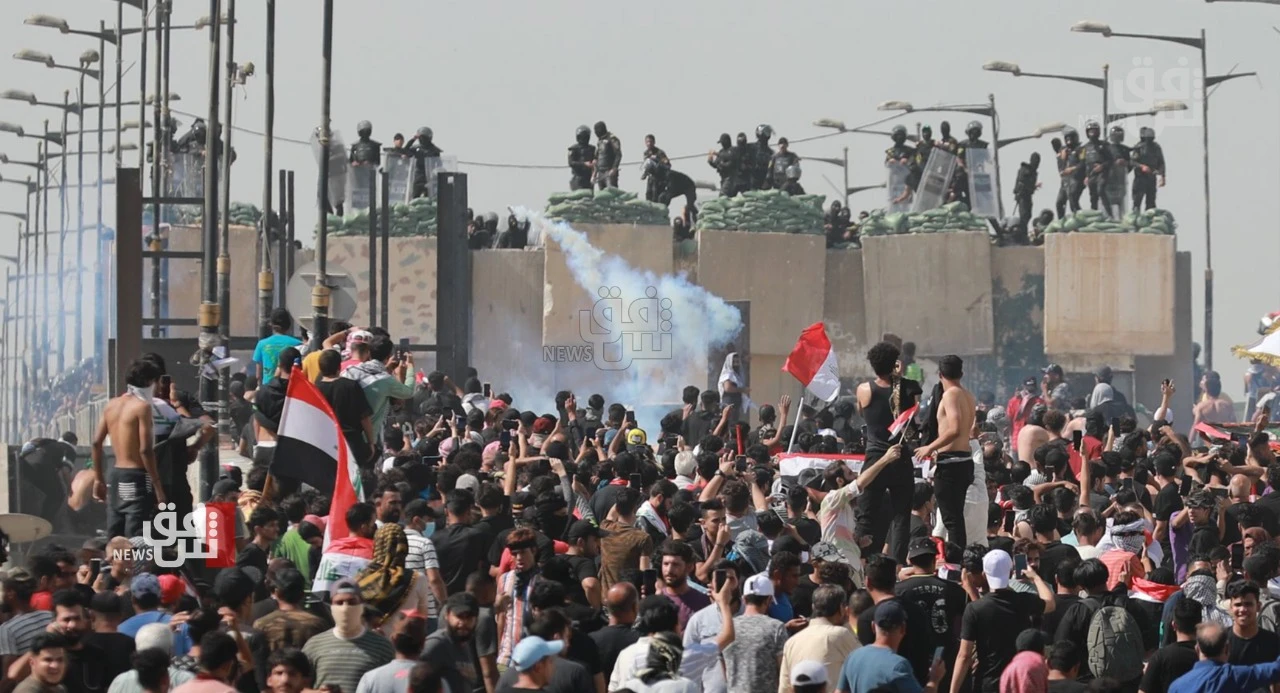
Families of Iraqis who lost their lives during the 2019 Tishreen protests are mobilizing to gather evidence for legal cases in Iraqi courts. This renewed push follows remarks made by Hadi al-Ameri, a prominent political figure, which they interpret as implicating those responsible for the deaths of their loved ones.
Background of Tishreen Protests
The Tishreen protests, which erupted in Baghdad on October 1, 2019, were driven by widespread discontent over corruption, inadequate services, and economic challenges. Demonstrations rapidly spread throughout central and southern Iraq, compelling the then-Prime Minister Adel Abdul-Mahdi to resign. The protests highlighted deep-seated frustrations among citizens and served as a flashpoint for a broader campaign for accountability and reform.
Hadi al-Ameri, the leader of the Badr Organization—a significant Shia political entity with ties to the Popular Mobilization Forces—recently commented on the protests. He characterized the unrest as a “sedition” that his faction, the “resistance,” bravely confronted. Many families of victims interpreted his words as an indication of who they believe is accountable for the tragic events.
Families Pursuing Legal Action
In light of al-Ameri’s statement, families like that of Umm Adel, who lost her son early in the protests, are now determined to pursue legal cases. She expressed her intention to take action, stating, “His statement showed us who killed our children.” While many families harbor skepticism about the likelihood of achieving justice in court, they feel compelled to at least establish accountability through legal proceedings.
Political analysts like Abu Mithaq al-Masari cast doubt on the admissibility of these lawsuits, arguing that the families may lack a direct legal connection to al-Ameri. Ultimately, he noted, it is up to the courts to determine the validity of such claims. This sentiment is echoed by several legal experts, including Muhammad Jumaa, who emphasized that legal action requires more than mere statements; explicit confessions are necessary to establish criminal liability.
Challenges in Seeking Justice
The road to justice for Tishreen victims appears fraught with obstacles. Abu Yasser, a father who lost a son during the protests, is skeptical about the efficiency of the legal system. He suggested that al-Ameri’s comments could be a distraction from pressing issues like fuel shortages and environmental concerns in Iraq. The comments may indicate a diversionary tactic rather than an admission of guilt or responsibility.
The background of these events raises critical questions about the effectiveness of the Iraqi legal system. Amnesty International has reported that past governments initiated multiple investigative committees regarding the Tishreen protests, yet findings remain obscure. Despite at least 2,700 criminal cases being filed, few have resulted in meaningful prosecutions, leading to a profound sense of injustice among victims’ families.
Despite the challenges ahead, the relatives of Tishreen victims remain resolute in their quest for accountability. They continue to gather documentation and pursue justice, embodying resilience in the face of a system fraught with complications and a history of impunity. While the path may seem daunting, their commitment to uncovering the truth and holding perpetrators accountable reflects a broader yearning for justice in Iraq.