
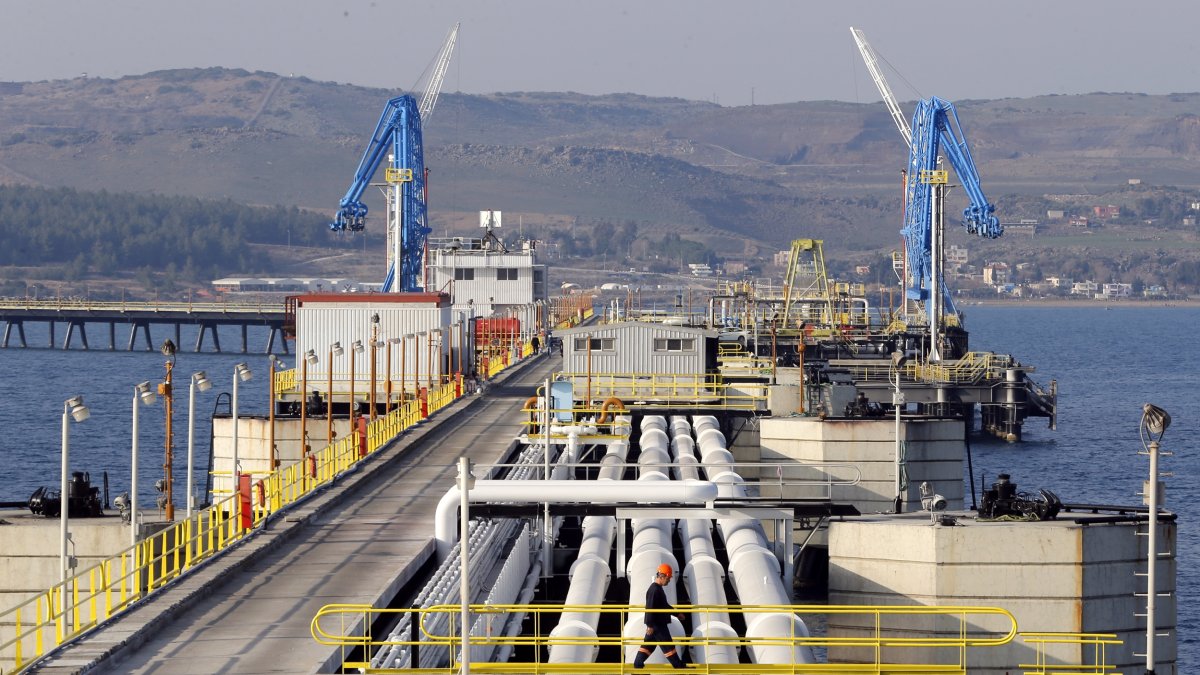
The recent announcement from Iraq regarding the potential supply of up to 1 million barrels of oil per day (bpd) to Türkiye marks a significant step in energy collaboration between the two countries. This development not only enhances the operational capacity of the Iraq-Türkiye Crude Oil Pipeline but also solidifies Ceyhan’s pivotal role in the global oil market, according to industry experts.
The Boost in Oil Transportation Capacity
On July 28, Iraqi Prime Minister Ali al-Zaidi announced Iraq’s capability to furnish Türkiye with 1 million bpd, establishing Iraq as a crucial ally in Ankara’s ambition to become a major energy hub. This declaration was followed by a noteworthy milestone: on August 1, Türkiye and Iraq signed a one-year deal aiming for the transportation of at least 750,000 barrels of crude oil daily through the pipeline to Ceyhan. This agreement underscores a commitment to optimize the pipeline’s existing capacity, which is approximately 1.5 million barrels per day, paving the way for future deliveries of oil from Kuwait and other Gulf nations as well.
Given the recent complications associated with oil shipments through the Strait of Hormuz, these developments mark an essential pivot toward alternative export routes. Such a strategy positions Ankara favorably, potentially enhancing its status as an energy corridor linking Middle Eastern oil producers with Western markets.
Strategic Energy Cooperation between Türkiye and Iraq
The energy partnership between Türkiye and Iraq is deepening beyond just oil transportation, extending into production capabilities as well. The Turkish Petroleum Corporation (TPAO) aims to elevate its oil and natural gas output to around 500,000 barrels per day by 2028, with a broader target of reaching 1 million barrels daily in the near term. A critical component of this strategy involves the Kirkuk oil fields, where TPAO recently acquired a 15% stake in BP Energy Company of Kirkuk Limited (BPECKL). This move positions TPAO as a key player in developing Kirkuk’s oil fields in collaboration with BP and ConocoPhillips, thus reinforcing energy ties between the two nations.
By enhancing cooperation in both oil transportation and production, Türkiye can effectively ramp up its oil and gas output, while also solidifying a broader energy corridor. This corridor would facilitate Iraqi and Gulf oil reaching global markets through Ceyhan, increasing the strategic significance of this terminal amidst the backdrop of risks associated with traditional shipping routes.
The Importance of Ceyhan as an Alternative Route
According to Sercan Çalışkan, an expert in Iraqi studies, the Iraqi Prime Minister’s assertions reflect a shared political commitment between Türkiye and Iraq to advance energy collaboration. Despite the technical challenges that may arise, Çalışkan emphasizes that achieving the goal of 1 million bpd is feasible, provided that both Turkey and Iraq exhibit the political will to expand existing capabilities. His observations highlight that the increased volumes of Iraqi oil transported through Ceyhan not only bolster Turkey’s ambitions of becoming an energy hub but also contribute to diversifying energy security away from the risks prevalent in the Strait of Hormuz.
Oğuzhan Akyener, head of the Turkish Energy Strategies and Policies Research Center, also noted that with the Iraq-Türkiye Crude Oil Pipeline’s technical capacity estimated at around 1.5 million bpd, it is entirely feasible for this pipeline to transport 1 million bpd in the near future. This development could create opportunities for Türkiye to stockpile oil during crises and engage in more extensive energy projects in Iraq, ultimately leading to a vital supply chain that enhances Türkiye’s objectives as an energy hub.
In conclusion, the commitment to enhancing Iraqi oil supply to Türkiye not only strengthens bilateral relations but also establishes a more secure and efficient pathway for oil distribution, making a robust case for Türkiye’s emerging role on the energy map.