
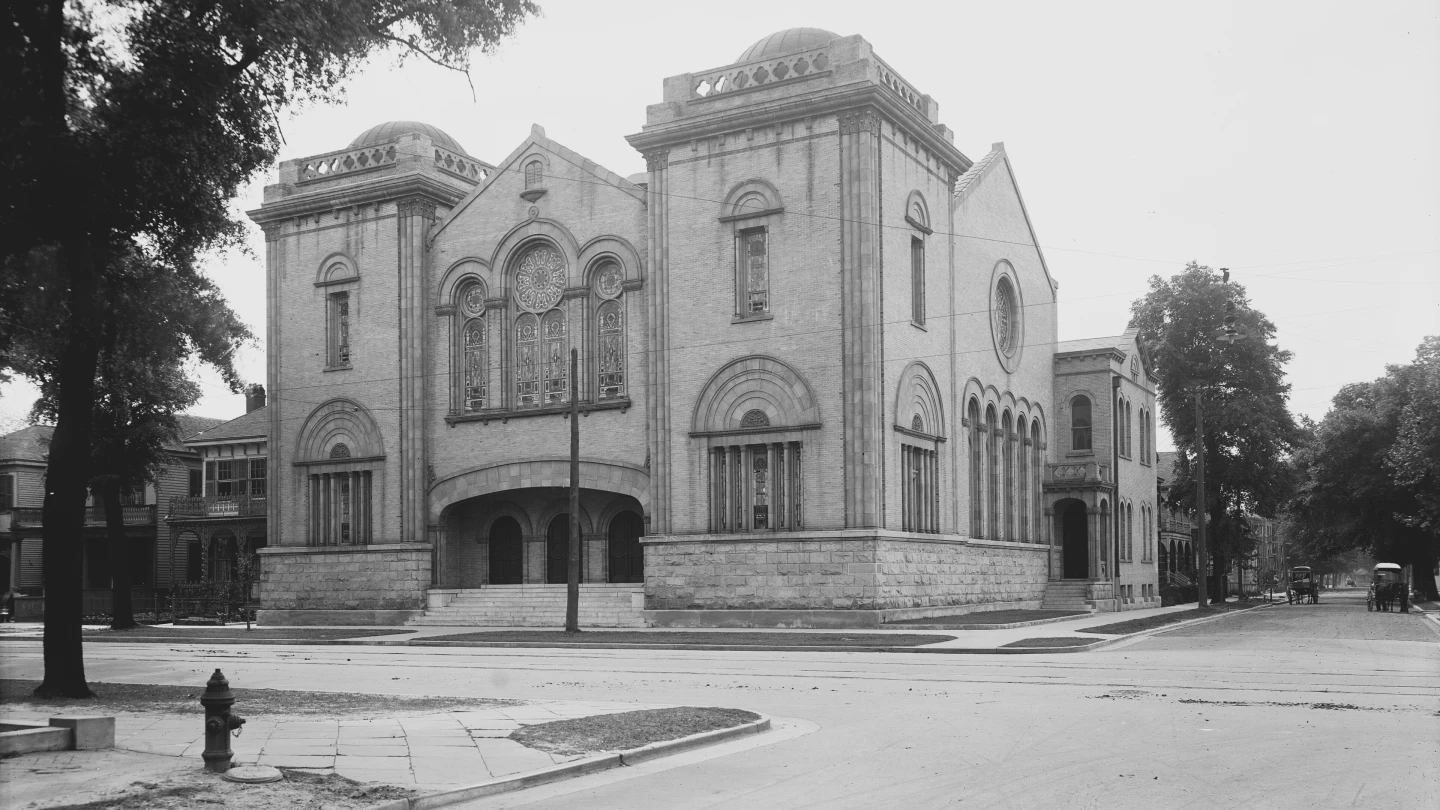
On June 10, 1943, while the Holocaust ravaged Jewish communities across Europe, Alabama took a bold step that set it apart from other states in the U.S. The Alabama legislature unanimously passed a resolution advocating for the establishment of a Jewish homeland in Israel. This historic measure recognized the urgent need for action in light of the ongoing extermination of Jews and emphasized that creating a homeland was a moral imperative and a restoration of justice.
The Role of Alabama Legislators in Jewish Advocacy
The initiative was championed by key figures including Abe Berkowitz, a prominent attorney and Zionist leader from Birmingham, alongside state senator James Simpson and state representative Sid Smyer. Their efforts were notable because they came a full five years before Israel declared its independence. This commitment reflected both the longstanding Jewish presence in Alabama and the deep historical connections between Jews and the land of Israel.
For generations, the Jewish community in Alabama has contributed significantly to the state’s socio-economic landscape. Despite past restrictions preventing Jewish settlement, such as the Code Noir issued by King Louis XV in 1724, the community found a foothold. Abraham Mordecai, a Jewish trader from Pennsylvania, became one of the first to settle in Alabama, even creating a life among the local Native American tribes. He believed that they descended from the Lost Tribes of Israel. However, he lived in isolation without a synagogue or a community, a stark contrast to the vibrant Jewish life that would emerge later.
The Growth of Jewish Life in Alabama
The Jewish community began to flourish in the mid-19th century, particularly in cities like Mobile. In 1841, they acquired land for a cemetery and established the Shaarai Shomayim congregation just a few years later. This marked the foundation of a communal life characterized by resilience and integration into Southern society. Jewish individuals made a mark in various sectors, including commerce and politics. For instance, the Lehman brothers opened a dry-goods store in Montgomery in 1844, which would eventually evolve into Lehman Brothers, a pivotal player in American finance.
As the Jewish community expanded, they also found ways to contribute to local culture and social reform. Notably, Rabbi Abraham Laser cared for yellow fever victims in Mobile during an outbreak in 1870, ultimately sacrificing his life. Jewish merchants began to set up businesses across Alabama, and Jewish leadership became involved in wider societal issues, including support for public education.
Challenges Amidst Cultural Integration
However, the story of Jewish Alabamians is not without its complexities. The civil rights era exposed divisions within the community; some members supported segregation while others actively opposed it. Rabbi Seymour Atlas of Montgomery forged a friendship with Martin Luther King Jr. and took part in the Montgomery bus boycott, yet faced backlash from his own congregation. This division reflects broader societal challenges, with Jewish communities across the South often targeted by white supremacists who misrepresented their involvement in civil rights as a conspiracy.
Despite these struggles, Alabama’s Jewish heritage is rich and multifaceted, encompassing diverse congregations, cultural contributions, and historical experiences. Today, Birmingham’s Jewish community thrives, featuring synagogues, schools, and a strong local presence. Institutions like Knesseth Israel, founded in 1889, provide vital religious services, while Chabad maintains educational programs that engage families and children.
Nonetheless, the community faces challenges with declining numbers, as the Jewish population has significantly dwindled over the years. Efforts, such as the relocation initiative offered in Dothan, have had mixed results. Birmingham remains the heart of Jewish life in Alabama, but as history has shown, sustaining this vital community for future generations will be crucial in maintaining the legacy that began with pioneers like Abraham Mordecai. Today’s Jewish children enjoy the community network that Mordecai longed for, but their continued presence in Alabama will depend on their resilience and adaptability in the face of modern challenges.