
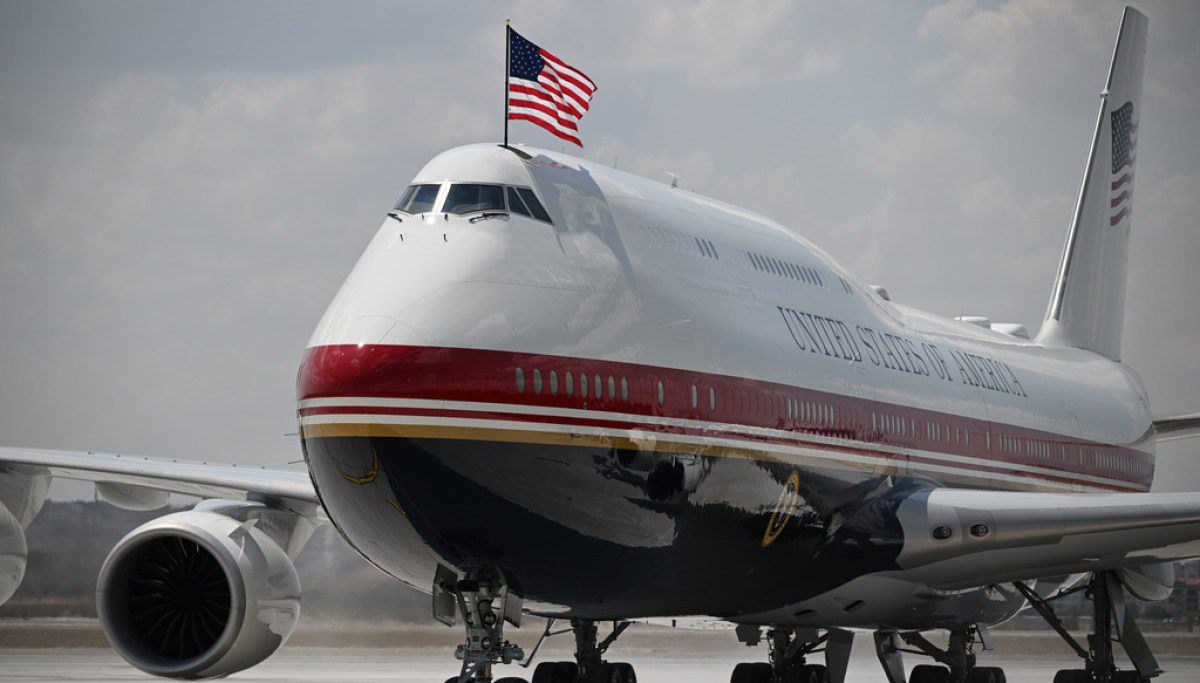
President Donald Trump has announced that the new Air Force One jet is being dispatched for significant upgrades to its antimissile defense systems, following security concerns that led him to utilize an older aircraft for a return trip from the NATO summit in Ankara, Turkey.
Concerns Over Aircraft Security
During a flight back from a World Cup match in New Jersey, Trump minimized worries surrounding the security features of the new Air Force One. He characterized the decision to enhance the aircraft as a precautionary measure aimed at equipping it with the latest defensive technology. “It has a lot of capability,” Trump remarked, providing insight into the plane’s features while also indicating that upgrades would soon be underway. “But as I understand it, in about a month or so, they’re gonna send it to have it be maxed out,” he said, noting that the process would span around a month.
Retrofitting Challenges with the New Jet
Reports and visual evidence have raised questions about the new Air Force One—a jet valued at $400 million and donated by Qatar. It appears this aircraft might not be upgraded with the same advanced defense systems that the older VC-25A, in service for decades, possessed. The defensive mechanisms on Air Force One combine publicly known technologies and classified systems designed to prevent attacks. Among the acknowledged countermeasures is the Large Aircraft Infrared Countermeasures systems, which utilize directed energy to confuse missile guidance. Additionally, the aircraft is equipped with EMP defenses, traditional flares, and a reinforced structure.
The concerns regarding the new Qatari jet stemmed from the Secret Service’s successful recommendation for Trump to return to using the older model, particularly given Turkey’s proximity to Iran. The Qatari jet is intended to serve as a temporary solution until the next-generation Air Force One is completed and set to debut in 2028.
Trump’s Stance on Security Threats
Throughout the recent discussions, Trump has maintained a composed demeanor when addressing the potential threats to his life. “You know the life of a president is very dangerous,” he noted previously, even stating that he is “No. 1 on the kill list for Iran.” This statement highlights the complexities of presidential security and the paramount necessity for robust defensive measures.
When Trump attended the NATO summit earlier this month, he initially traveled on the Qatari jet but made an unexpected stop in the UK via the older Air Force One before reboarding the newer aircraft. This change was reported by major media outlets, including the New York Times, citing security concerns about the new jet’s defensive capabilities. Following the publication of that story, the Trump administration took significant steps to subpoena journalists involved in the reporting.
By actively addressing these security matters, Trump seeks to emphasize his prioritization of safety while navigating the intricate landscape of international relations and personal security as the President. The developments surrounding the Air Force One upgrades and the implications of aircraft security initiatives remain critical topics as the administration enhances its focus on protecting its leader during tumultuous times.