
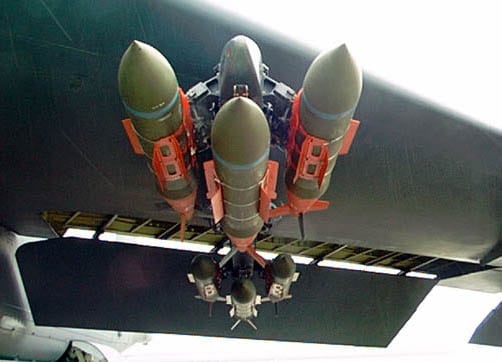
The U.S. government has given the green light to nearly $7 billion in prospective military sales with Saudi Arabia and Iraq, signaling a significant engagement in regional defense collaboration. This includes a substantial $5 billion agreement for Joint Direct Attack Munitions-Extend Range (JDAM-ER) with Saudi Arabia and close to $1 billion for Bell helicopters with Iraq.
Overview of Military Sales to Saudi Arabia
The arms deal with Saudi Arabia is particularly noteworthy as it encompasses over 10,000 JDAM-ER kits, which are known for enhancing the precision of aerial munitions. In addition to the JDAM-ER kits, the agreement also involves the acquisition of more than 5,000 BLU-111 500-pound general-purpose bombs and an additional 5,000 BLU-117 2,000-pound general-purpose bombs. Boeing will be responsible for manufacturing these munitions, further solidifying defense ties between the U.S. and Saudi Arabia.
Details of Iraq’s Military Equipment Acquisition
Iraq’s portion of the deal involves nearly $1 billion dedicated to Bell helicopter sales. These helicopters are essential for bolstering Iraq’s aerial capabilities as the country continues to navigate complex security challenges, particularly within the context of its fight against terrorism. The assistance in military equipment is expected to enhance Iraq’s operational readiness, allowing for more effective responses to threats.
Strategic Implications of the Military Sales
These military sales to both Saudi Arabia and Iraq highlight the United States’ commitment to maintaining a strong presence in the Middle East. By enhancing the military capabilities of these nations, the U.S. aims to strengthen regional stability and counterbalance potential threats, including from adversarial forces. The transfer of such advanced weaponry also serves as a strategic move to foster deeper alliances with key partners in a region where geopolitical dynamics are continually evolving.
Conclusion: Future of U.S. Military Aid in the Middle East
As these military sales progress, the implications for U.S. foreign policy in the Middle East will likely continue to unfold. Enhanced military ties may lead to increased collaboration in other areas, paving the way for a more robust partnership. The long-term impact of these arms deals will depend on how effectively Saudi Arabia and Iraq incorporate these advancements into their defense strategies, as well as the evolving political landscape in the region.