
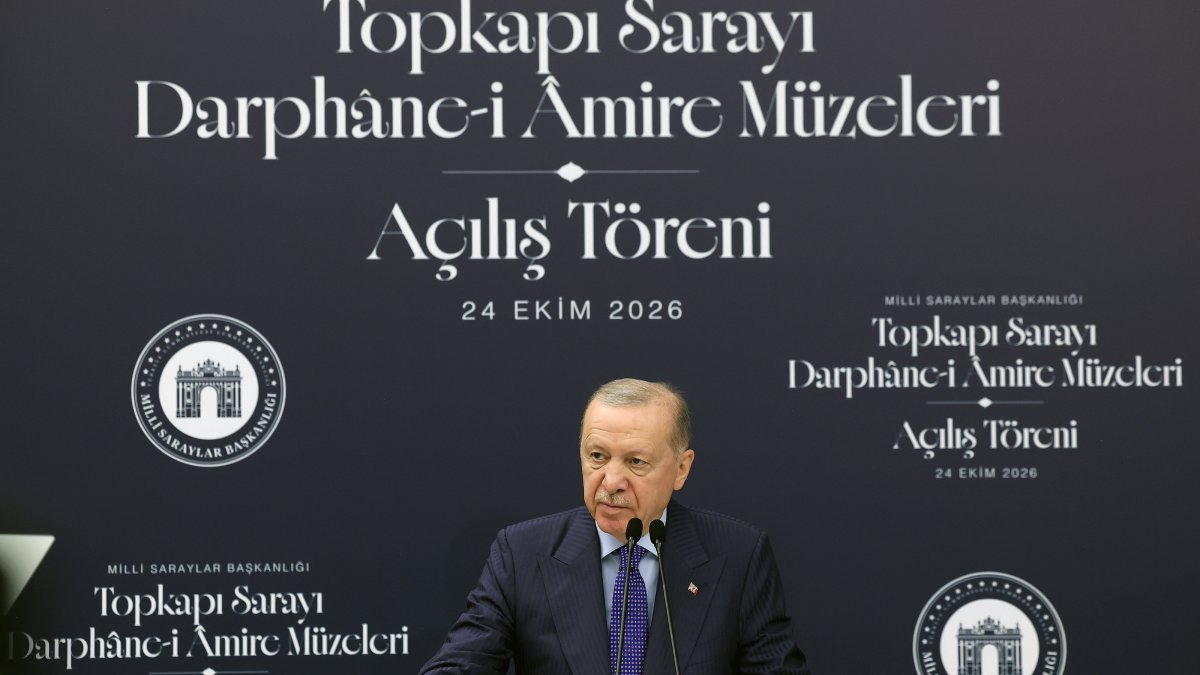
President Recep Tayyip Erdoğan recently inaugurated five new museums at the Topkapı Palace in Istanbul, showcasing an impressive collection of over 10,500 artifacts. This exhibition, made possible by the restoration of the historic Darphane-i Amire complex, aims to enhance public access to Turkey’s rich cultural heritage.
Transformation of Historic Space
During the inauguration, Erdoğan highlighted the extensive restoration work that transformed seven buildings housing 46 halls across an area of 17,000 square meters into five distinct museums. Among the artifacts displayed are more than 2,000 works of Islamic calligraphy, which will be publicly shown for the first time across twelve halls. The newly opened museums significantly broaden the array of historical and cultural items available at Topkapı Palace, one of the quintessential landmarks of the Ottoman Empire.
Erdoğan emphasized that this complex is home to the first arms museum established during the Ottoman era, noting that its restoration has turned the area into a cultural district that sets a precedent on an international level. He remarked on the depth of Turkey’s historical and cultural legacy, which reflects the beautiful amalgamation of science, wisdom, and aesthetic understanding found in these treasures.
Historical Awareness and Cultural Preservation
Moreover, Erdoğan stressed the notion that preserving cultural assets goes beyond merely restoring structures and exhibiting objects. He articulated that their essence lies in safeguarding the knowledge and traditions they embody and ensuring they are transmitted to future generations. “These works are not just significant; they are treasures of our cultural heritage,” he explained, underscoring the importance of nurturing this legacy to enrich future generations.
In his address, President Erdoğan was also critical of past policies regarding cultural identity, lamenting that previous administrations had overlooked Turkey’s rich historical roots in favor of Westernization. He cited various instances, such as the prior use of the Yıldız Palace as an entertainment venue and the sale of rare manuscripts to foreign buyers. Erdoğan characterized these actions as efforts to alienate the Turkish populace from their national and spiritual values.
Significant Expansion of Public Display
The opening of these museums marks a notable expansion of the public collection at Topkapı Palace, which previously showcased 7,500 artifacts. With the integration of 10,500 new items, the palace strengthens its position as a leading cultural destination globally. Visitors will have the opportunity to view an extensive array of calligraphy works that were previously tucked away in storage.
The restored complex, named after the Ottoman imperial mint, has been meticulously restructured to preserve its historical significance while accommodating the new museums. This initiative aligns with broader efforts to revitalize Ottoman-era landmarks and enhance public access to their collections.
Future Restoration Projects
Beyond the Topkapı Palace, Erdoğan also highlighted ongoing restoration efforts at Edirne Palace, another historic Ottoman imperial site. He stated that Ottoman sultans previously utilized Edirne Palace alongside Topkapı Palace for approximately 300 years. The government aims to restore this complex to its former glory, with expectations for completion in the next year. This revival will significantly bolster Turkey’s architectural heritage and enrich its cultural landscape.
By undertaking these ambitious restoration projects, Erdoğan reiterated the importance of preserving Turkey’s historical architecture for future generations, showcasing the nation’s unique cultural narrative and legacy.