
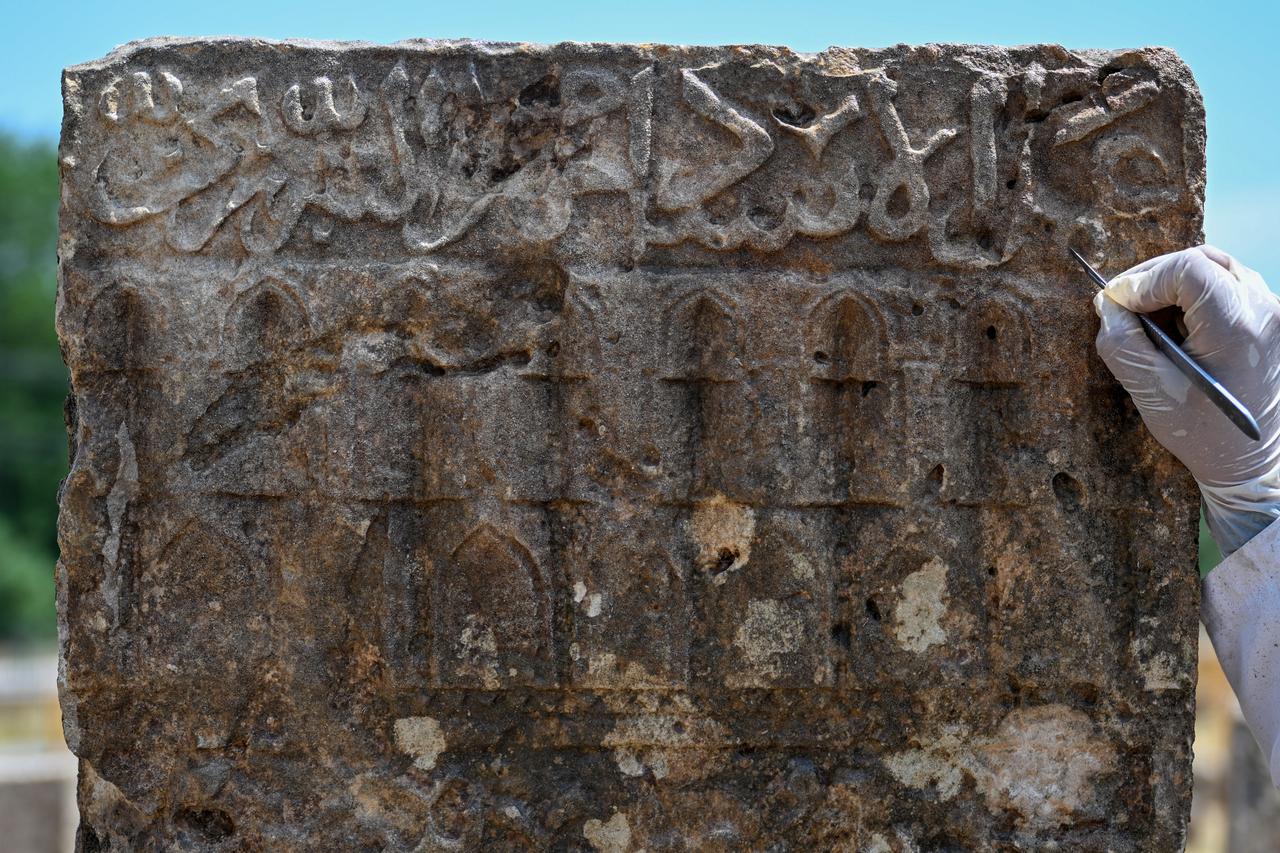
An intriguing discovery has been made at the Seljuk Cemetery in Van’s Gevas district, Türkiye. Archaeological efforts have revealed an inscription bearing the name “Amel-i Üstat Muhammed el-Tebrizi,” identifying the work of a master craftsman from Tabriz. This significant find underscores the importance of the cemetery, which houses the centuries-old Halime Hatun Tomb amid one of Turkey’s largest Muslim burial sites.
Ongoing Excavation and Historical Significance
Excavation and restoration endeavors began in 2022, sanctioned by the Ministry of Culture and Tourism of Türkiye. This site has received “Presidential Decisive Excavation” status under the Heritage for the Future Project and is led by Associate Professor Ercan Calis from Van Yuzuncu Yil University’s Art History Department. The cemetery’s historical and cultural importance is accentuated by the architecture, inscriptions, and traditional motifs found on gravestones, some of which reach heights of up to two and a half meters.
The dedicated team of 15 specialists, including experts in art history, archaeology, architecture, and conservation, has meticulously surveyed about 50 decares (approximately 12 acres) of the site, discovering over 1,000 gravestones. Recently, they unveiled a gravestone whose lower portion was buried 50 centimeters underground, demonstrating the care and effort put into these excavations.
Discovering the Fourth Master Craftsman
Calis expressed enthusiasm about unveiling the inscription, marking the discovery of the fourth identified stonemason at the site. He highlighted how the artistry captured through this piece reflects not only exquisite craftsmanship but also the unique characteristics of the master’s style and workshop techniques. “This new discovery means a lot to us,” said Calis, emphasizing that the distinguishing features of this stone elucidated its creation by a different master compared to previously identified artisans.
The arrangement of this gravestone is notably distinct; while the inscriptions from other masters typically appear on the head side of gravestones, the new inscription is located at the foot side. Such details enrich the historical narrative and showcase the craftsmanship of the time.
A Treasure Trove of Craftsmanship
Deputy excavation director Dr. Ahmet Erk noted that identifying a new master craftsman illustrates the diverse origins of artisans contributing to this noteworthy site. “This inscription signifies a broader cultural influence, with masters originating from different regions, particularly shown through variations in decoration and stone structures.” He characterized the cemetery as resembling an “open-air museum,” where knowledge is progressively transformed into practice among undergraduate and postgraduate students.
The ongoing archaeological endeavors at Van’s Seljuk Cemetery illuminate the skill and artistry of medieval craftsmen, offering vital insights into the region’s rich heritage. These findings not only foster academic inquiry but also nurture a deeper appreciation for Turkey’s historical narrative. As excavation and research continue, we can anticipate further revelations that will enhance our understanding of the past.