
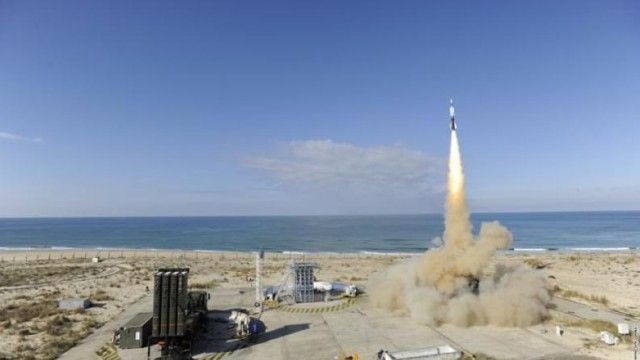
France and Türkiye have signed a defense cooperation roadmap at a crucial moment, highlighting the necessity of collaboration between the two nations, even if they are cautious about publicly admitting it. This agreement does not outright confirm any specific deals such as SAMP/T, Meteor, or a technology-transfer initiative. However, it establishes a political channel crucial for Türkiye’s air-defense restructuring and France’s interest in enhancing its role in Türkiye’s modernization efforts after a period of tension.
Strategic Bilateral Discussions
The roadmap emerged following high-level discussions in Paris between defense officials from both countries. Official statements remain cautious, emphasizing military collaboration, strategic dialogue, and regular contacts aimed at tangible outcomes. Importantly, there is no public list of specific programs, contract values, or timelines, nor any formal acknowledgment that SAMP/T is part of the agreement. This distinction is critical; a roadmap serves as a framework to facilitate future contracts rather than a binding commitment.
The timing of this agreement is no coincidence. SAMP/T NG has been a focal point for France, Italy, and Türkiye for several years. Initial cooperation regarding a long-range air-defense system began in 2017–2018. However, political tensions exacerbated by issues in Syria, Libya, and the Eastern Mediterranean interrupted progress. Yet, with recent statements from Emmanuel Macron about ongoing technical work, it appears that earlier resistance to potential sales is easing.
Turkey’s Defense Needs
For Türkiye, the rationale is straightforward. As it develops its layered air-defense strategy under the Steel Dome framework, it requires a high-end system capable of addressing advanced missile threats within a NATO context. The prior Russian S-400 acquisition did not resolve its defense needs; it created new complications, including exclusion from the F-35 program and impositions of sanctions. This has left Türkiye with a politically contentious system that is incompatible with NATO, complicating its broader modernization efforts.
Recent signals from Russia concerning the S-400 are significant. Moscow has hinted that Turkish systems may be transferred to a third party allied with Russia. If this occurs, it could alleviate a primary barrier to Türkiye’s re-entry into the F-35 program. This does not guarantee a SAMP/T agreement but aligns with Ankara’s broader strategy to mend its standing within Western defense circles while maintaining operational flexibility.
Potential for Industrial Collaboration
Should SAMP/T NG be included in this new phase of cooperation, it will likely not merely be a standard commercial transaction for missile launchers. Türkiye is expected to demand technology transfer, industrial involvement, and integration into its existing defense architecture. This approach has been consistent for Ankara. The critical inquiry is not if Türkiye will procure an air-defense system from Europe, but rather on what conditions the purchase will be made. A package involving Turkish industry, integration into the Steel Dome framework, and significant know-how transfer would carry profound political implications beyond the mere acquisition of defense assets.
From France’s perspective, facilitating SAMP/T NG would lead to more than just a sales transaction. Collaboration would bring key French defense firms into the equation, enhancing bilaterality in areas such as radar systems, missile integration, and future upgrades, which would benefit both nations. Moreover, it permits Paris to rehabilitate its presence in a Turkish market that has often encountered friction due to political disagreements.
While the recent agreement is promising, the broader geopolitical landscape remains complex. France and Türkiye still experience friction within NATO, particularly concerning the South Caucasus. Both nations are at odds regarding partnerships with Azerbaijan and Armenia, complicating their relationship amid emerging opportunities for defense dialogue. This contradiction underlines that while bilateral defense discussions may evolve, they do not wholly diminish existing rivalries within the NATO framework.
Ultimately, the significance of this roadmap transcends mere military procurement. The central question is whether Ankara and Paris are preparing to collaborate on a larger scale, encompassing air defense, industrial integration, advanced missile systems, and drone technology. If successful, this roadmap could symbolize Türkiye’s reintegration into the European defense industrial landscape and pave the way for a strategic partnership that offers mutual benefits.