
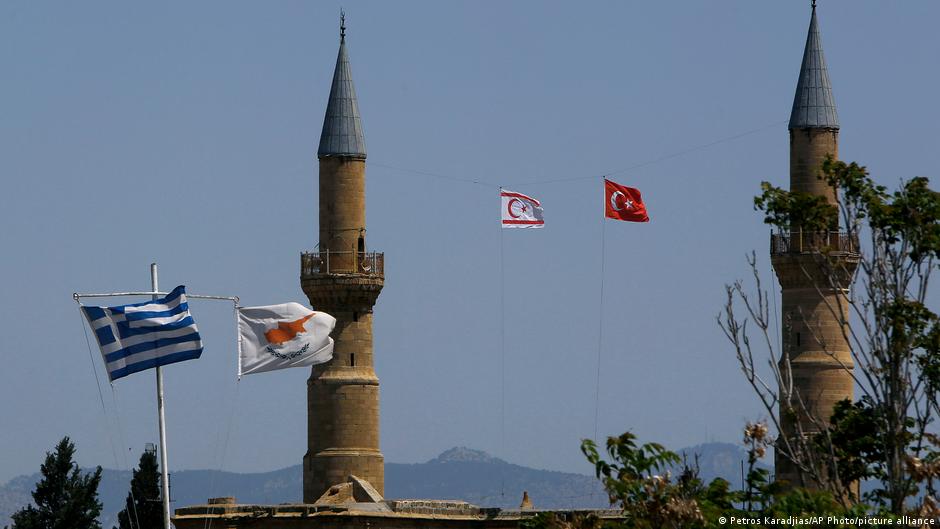
Monday marks the 52nd anniversary of Turkey’s 1974 invasion of Cyprus, an event that resulted in the island’s deep division. Despite the passage of five decades, the Cyprus issue remains one of the world’s most persistent unresolved conflicts, drawing international attention and concern.
Renewed Efforts for Peace by the UN
In a recent development, the United Nations announced that Secretary-General Antonio Guterres is scheduled to visit Cyprus from July 27 to 29. This visit will be the first by a UN secretary-general in 16 years and aims to revitalize the stalled peace process concerning the island’s division. Guterres’s visit follows a renewed initiative by the UN that began with an informal meeting in Geneva in March, signaling a serious move to stimulate discussions and find resolutions.
In the lead-up to the visit, Maria Angela Holguin, the UN secretary-general’s personal envoy, conducted various consultations across Cyprus, Greece, Turkey, the UK, and Brussels. This extensive engagement was aimed at assessing the political landscape to determine if meaningful negotiations could recommence. During his time in Cyprus, Guterres is expected to meet separately with President Nikos Christodoulides and Turkish Cypriot leader Tufan Erhurman before a joint session with both leaders on July 29.
A Historical Perspective on UN Involvement
The last UN secretary-general to visit Cyprus was Ban Ki-moon in 2010, an effort that sought to foster political momentum in talks between then-President Demetris Christofias and Turkish Cypriot leader Mehmet Ali Talat. Unfortunately, that initiative lost steam shortly after due to political shifts, including Talat’s election loss and lingering disagreements over core negotiation issues.
Prior to Ban’s involvement, Kofi Annan famously engaged in brokering a comprehensive settlement from 2002 to 2004, leading to the Annan Plan, which was narrowly approved by Turkish Cypriots but overwhelmingly rejected by Greek Cypriots in simultaneous referendums. The historical context underscores the complex and often contentious nature of these negotiations, which have repeatedly stumbled over core issues of governance, territorial adjustments, and security.
The Current Climate and Insights from the Media
Recently, reports from the British media have surfaced, suggesting that the UN is exploring a new framework for resolving the Cyprus issue. According to an article in The Independent, Holguin might be working on a revised settlement proposal that seeks to retain a bizonal, bicommunal federation while offering greater autonomy to both constituent states. This framework might include anticipated territorial adjustments and security arrangements, such as maintaining Greek and Turkish troops on the island under NATO oversight.
However, these reports have not been officially confirmed by the United Nations, and Cyprus President Christodoulides has indicated that some of the media’s assertions might be inaccurate. Nonetheless, there appears to be a cautious optimism surrounding these developments, which some believe could lead to a more structured diplomatic effort in the coming months.
The Path Forward: What’s Next for Cyprus?
Despite high expectations for Guterres’s upcoming visit, diplomatic sources suggest that the immediate goal is not to finalize a draft settlement but rather to lay the groundwork for further discussions. There are talks of organizing a new informal expanded meeting that would include leaders from both communities in Cyprus, as well as representatives from Greece, Turkey, and the UK—the three guarantor powers—alongside the UN.
Such meetings could potentially be scheduled for late August or early September, with intentions of adopting a more structured approach compared to previous informal gatherings. This ongoing diplomatic activity comes at a time when conditions for renewed dialogue appear to be changing, particularly after the election of Turkish Cypriot leader Tufan Erhurman, who seems amenable to revisiting the idea of a bizonal, bicommunal federation, unlike his predecessor.
The evolving landscape of the Cyprus issue, combined with increased EU involvement and engagement from other stakeholders, may pave the way for a more decisive phase in negotiations. As the situation unfolds, the role of international diplomacy will remain crucial in shaping the future of Cyprus and its longstanding division.