
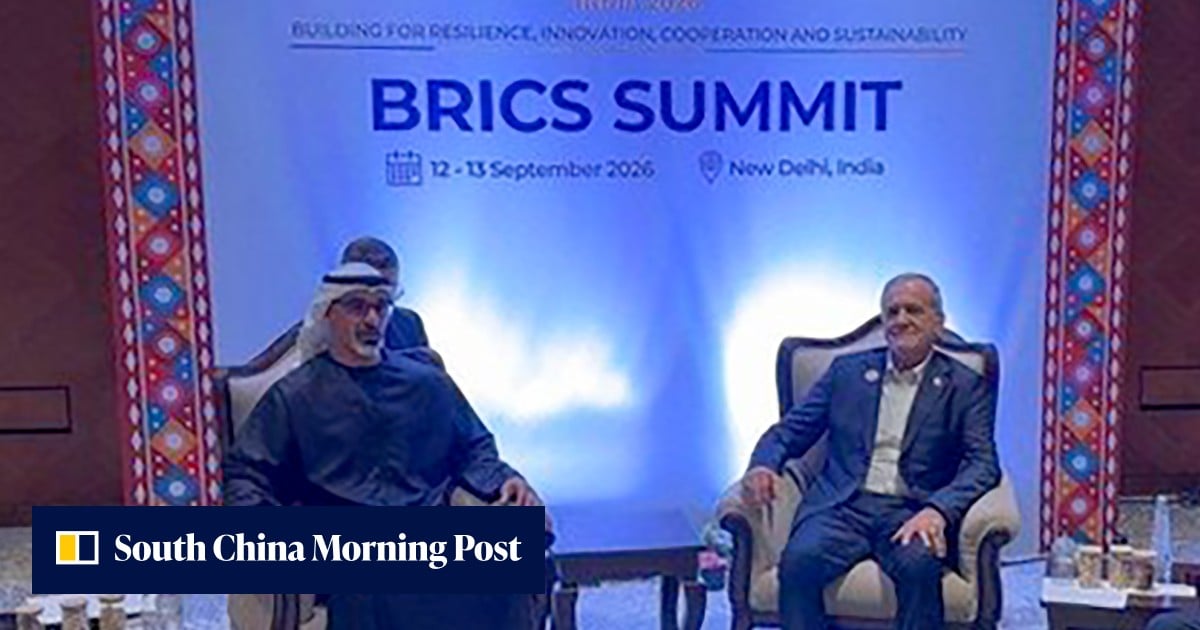
Iran’s geopolitical landscape has shifted significantly following a recent high-level meeting between Iranian President Masoud Pezeshkian and the Crown Prince of Abu Dhabi, Sheikh Khaled bin Mohamed bin Zayed Al Nahyan. This significant encounter took place on the sidelines of the Brics summit in New Delhi, and it marks the first substantial dialogue between these two nations since the eruption of war in Iran.
Background of Rising Tensions
The aftermath of the conflict has seen escalating tensions in the region, particularly affecting oil supply routes. Just days prior to the meeting, Saudi Arabia’s key East-West oil pipeline was attacked by drones, prompting a suspension of operations. This disruption has aroused international concerns regarding potential instability in global oil markets. In this context, the meeting between Iran and the UAE may point to a possible thaw in relations that have been strained in recent months, predominantly due to US-Israeli military actions against Iranian interests.
The Iranian embassy in New Delhi confirmed the meeting, indicating that the two leaders sought to re-establish dialogue following a period of heightened animosity. Since late February, frictions intensified, with Iran responding to US-Israeli airstrikes by targeting American allies in the region.
Aiming for De-escalation and Stability
After their discussions, Crown Prince Sheikh Khaled highlighted the necessity of reducing tensions and fostering stability in the region. Both leaders focused on addressing various regional and global challenges, underlining the importance of collaborative efforts toward de-escalation. Given the recent turmoil, including retaliatory strikes that have affected energy infrastructure and commercial hubs in Dubai and Abu Dhabi, this dialogue is timely and critical.
The resilience and infrastructure of the UAE have been tested, as Iranian retaliation has resulted in attacks causing damage across key industrial areas. This situation illustrates the precariousness of security in the Gulf region, where one misstep could lead to wider conflict. The discussions between Iran and the UAE could provide a framework for mutual understanding and conflict resolution to mitigate further risks.
The Implications of Regional Dynamics
The ongoing strife in the Strait of Hormuz has also contributed to the rising stakes in regional security, with increasing confrontations involving commercial vessels and oil tankers. The volatile environment poses a threat not just to regional players but also to global economic stability, which could be severely impacted should oil supplies be compromised.
Overall, the recent meeting between Iranian and Emirati leadership offers a glimmer of hope in navigating an increasingly complex geopolitical situation. Engaging in dialogue may create pathways to peace and collaboration, addressing immediate concerns surrounding security and energy supplies. As both nations acknowledge the importance of dialogue, the future of their relationship could shape broader Middle Eastern dynamics, highlighting the need for a coordinated approach to regional challenges.
In conclusion, the recent meeting signifies a potential turning point, amid rising apprehensions generated by military conflicts and disrupted supply chains. By advocating for stability and cooperation, both Iran and the UAE may find common ground despite existing frictions, charting a course towards a more peaceful and secure future.