
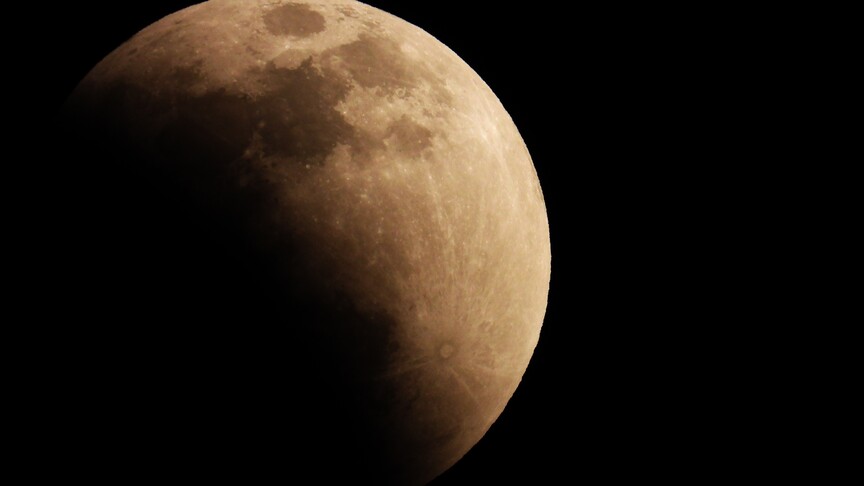
The United Arab Emirates (UAE) is on the brink of a groundbreaking chapter in space exploration, signaling a shift towards lunar mining and a permanent human presence on the Moon. According to Ibrahim Hamza Al Qasim, the deputy director general of the UAE Space Agency, this vision will soon transition from concept to reality. Speaking at the 77th International Astronautical Congress (IAC) in Antalya, Turkey, Al Qasim shared insights into upcoming missions aimed at tapping into space resources that are scarce on Earth but plentiful beyond our atmosphere.
The Future of Lunar Mining
Al Qasim elaborated on the UAE’s commitment to exploring and utilizing resources from space, emphasizing the potential of mining rare metals and other materials from the Moon. He stated, “We are evolving towards extracting resources that are limited on Earth but abundant in space.” This strategic focus suggests that the nation’s space initiatives are not only about exploration, but also about establishing a viable economic model anchored in lunar resources.
Founded in 1997, the UAE’s journey in space exploration has been marked by significant advancements over the past 30 years. With a notable commitment to deep space missions that target the Moon, Mars, and even the asteroid belt, the UAE has demonstrated its readiness for ambitious undertakings. Al Qasim mentioned that the first launch of their deep space program is scheduled for the first quarter of 2028, alongside an astronaut corps that already includes two members who have flown to the International Space Station.
Emphasizing Private Sector Engagement
A noteworthy aspect of the UAE’s space strategy is the increasing focus on private sector involvement. Al Qasim pointed out that over 50% of funding for space initiatives now comes from private enterprises rather than solely from government budgets. This shift highlights a broader trend in the UAE’s space ecosystem, making it clear that partnerships with private firms are crucial for sustainable growth and innovation in space exploration.
Advances in artificial intelligence and next-generation robotics are pivotal in lowering the barriers for entry into space ventures. By leveraging these technologies, emerging space programs can achieve previously unattainable milestones. Al Qasim indicated that unforeseen missions would soon depart from our traditional understanding of space exploration, pushing boundaries previously thought impossible.
A New Era in Space Exploration
“In the next decade,” Al Qasim noted, “you will see incredible missions involving humans returning to the Moon, and establishing a permanent presence there.” This perspective not only suggests a return to lunar exploration but underscores the importance of utilizing extraterrestrial resources. The potential for harvesting rare metals and other materials from space may dramatically shift industries on Earth, providing new avenues for growth and development.
As the IAC 2026 unfolds, co-hosted by the Turkish Space Agency and the SAHA Istanbul defense cluster, the discussions will undoubtedly further ignite the excitement surrounding space exploration. With partnerships and innovative technologies paving the way, the UAE is approaching a future where resources from space can play a critical role in shaping new industries. As Al Qasim put it, “We are fast approaching a time when we could have all the resources we need on Earth to really drive a new era of industries.” This is indeed a thrilling time for all involved in space and a vital moment in redefining our relationship with the cosmos.