
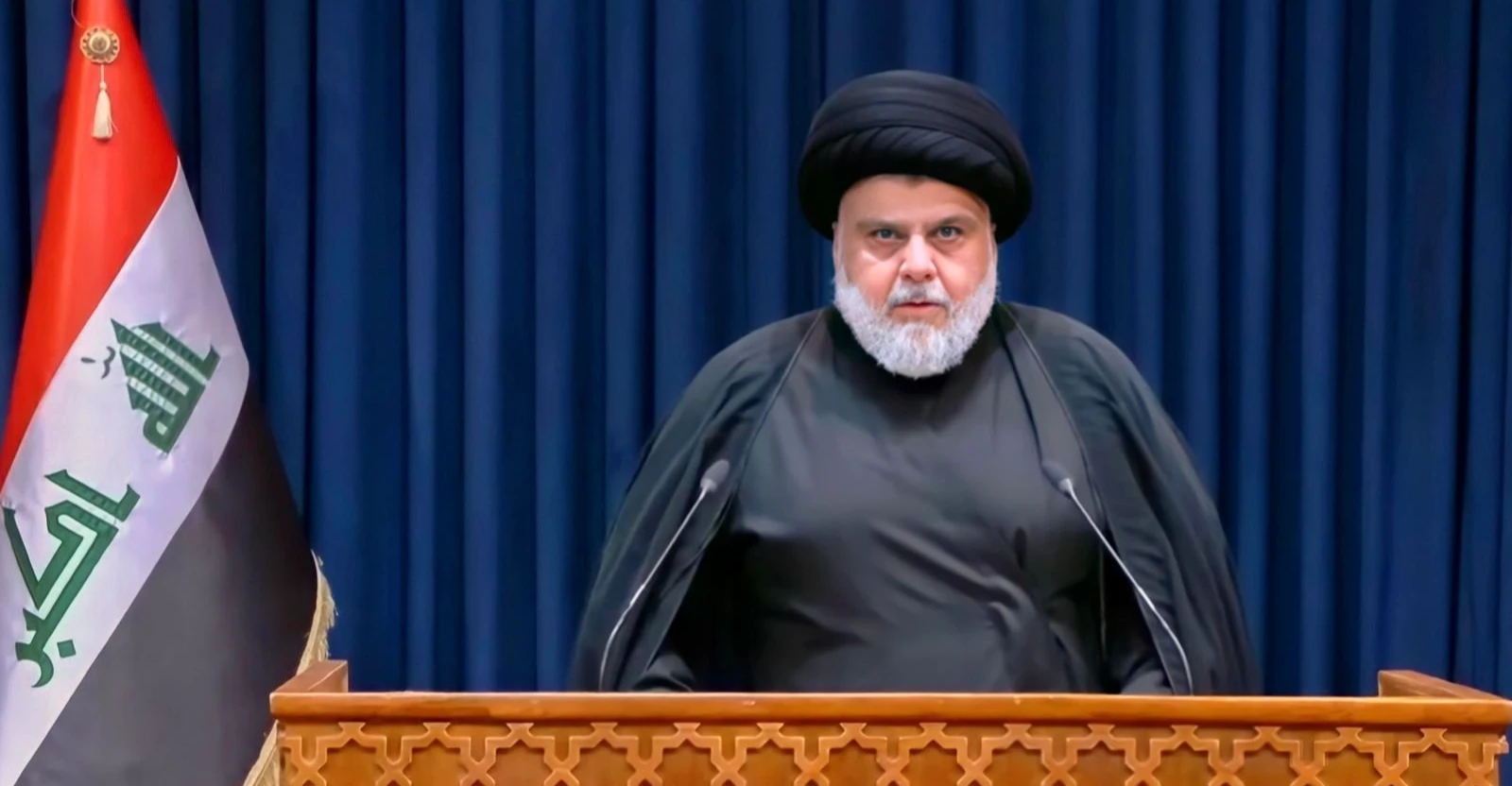
Muqtada Al-Sadr, the leader of the Patriotic Shiite Movement in Iraq, has recently made a call for the United States to respect Iraq’s sovereignty. His plea emphasizes the importance of establishing relations based on mutual respect and fairness. Al-Sadr’s message comes amid a backdrop of historical tensions between Iraq and foreign powers, particularly the U.S., and aims to push for a future devoid of external conflict and interference.
Emphasizing National Independence
In a strongly worded statement, Al-Sadr honored the legacy of his movement’s resistance against what he terms the “U.S. occupation of Iraq.” He underscored the primacy of national independence over foreign influences and ties. Al-Sadr vehemently rejected any attempts to label his movement as “terrorist,” instead drawing parallels with Iraq’s broader struggle against all forms of foreign occupation, urging a shift toward equitable relations. “If you want to turn the page, let us do so with justice and fairness, without arrogance,” he stated. This call for restoration of justice reflects a longing for dignity and respect in Iraq’s dealings with global powers.
Advocating Balanced Foreign Relations
Al-Sadr’s call for better relations is framed within a context of non-alignment, disapproving of Iraq’s dependency on either Eastern or Western powers. He posits that Iraq should remain free from international disputes that do not directly serve its interests. This stance not only promotes Iraq’s autonomy but also conveys a message against entangling alliances that may compromise its national integrity. He remarked that Baghdad should not be obligated to intervene in conflicts involving other nations, proposing a more principle-based foreign policy.
Critique of U.S. Policies and Regional Dynamics
Moreover, Al-Sadr expressed discontent with perceived U.S. favoritism towards Israel, labeling it as a “spoiled daughter,” and criticized Western nations for exacerbating tensions in the region. He encouraged major world powers to contribute to peace rather than perpetuating conflict, advocating for a collaborative approach aimed at stability rather than strife. Al-Sadr’s vision promotes a shift toward peaceful coexistence based on Iraq’s national interests rather than serving as a pawn of foreign agendas.
A Historical Context of Resistance
The Mahdi Army, which Al-Sadr led in the past, fought vigorously against U.S. troops following the 2003 invasion of Iraq. Even after the group’s disbandment in 2008, his faction, the Promised Day Brigade, maintained active opposition to Coalition forces. Recently, Al-Sadr took a significant step by dissolving the Promised Day Brigade as the Coalition ended its military mission in Iraq, a move signifying readiness for a transition toward a more peaceful existence while maintaining Iraq’s integrity.
Al-Sadr’s actions represent a broader desire for Iraq to operate independently within the international arena, a sentiment echoed in his recent statements urging the Iraqi factions to align themselves with national security bodies. His stance adds a layer of complexity to Iraq’s evolving political landscape, signaling a commitment to national sovereignty that might reshape international relations in the region moving forward.
This renewed focus on Iraq’s sovereignty and independence sets the stage for significant political and diplomatic developments, as Al-Sadr seeks to redefine Iraq’s role on the global stage with an emphasis on resilience, dignity, and self-determination.