
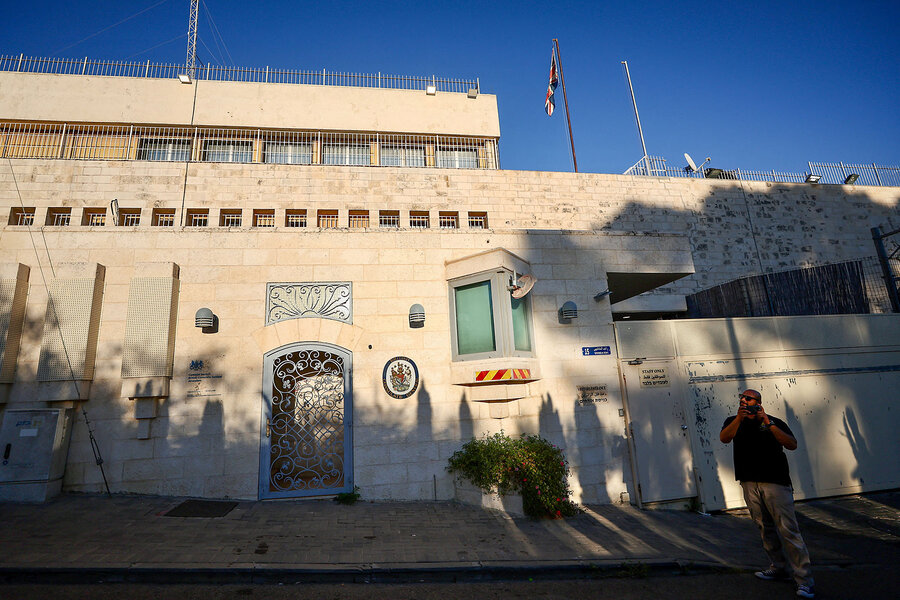
A recent diplomatic clash has erupted following the United Kingdom’s decision to impose trade restrictions on Israeli settlements in the West Bank. This move has spurred Israel to retaliate by ordering the closure of the British Consulate in East Jerusalem, igniting tensions between the two governments.
Details of the Trade Ban
British Foreign Secretary Ed Miliband announced this significant policy shift in the House of Commons, characterizing it as a response to what he described as the ethnic cleansing of Palestinian territories by “settler terrorists.” This measure comes as part of a broader commitment from Canada and ten other European nations to restrict trade linked to settlements, which are largely viewed as illegal under international law and detrimental to any potential peace agreements with the Palestinians.
The restrictions include a ban on importing goods from these settlements, reflecting a longer-standing commitment by the UK and other European nations to support a two-state solution. The announcement signifies one of the most forceful actions against Israeli settlement policies in recent years, wherein Miliband underscored the necessity of a diplomatic approach to ensuring stability in the Middle East.
Israel’s Reaction
In response to the UK’s stance, Israeli Foreign Minister Gideon Sa’ar labeled the new trade restrictions as “hostile” and “anti-Israel.” Beyond closing the British Consulate, Israel has announced plans to expel British representatives from various organizations operating within its borders, further escalating the diplomatic rift. Sa’ar condemned the UK’s actions as an intrusion into Israel’s sovereignty and electoral processes.
Israeli Prime Minister Benjamin Netanyahu’s administration has faced criticism for its lack of measures to address settler violence and the unchecked expansion of illegal outposts in the West Bank. The situation has become increasingly fraught with tension, as heightened settler aggression towards Palestinians coincides with the rapid development of settlements. In particular, recent actions, such as tender announcements for new housing projects in the E1 area, further threaten the viability of a future Palestinian state, prompting warnings from various international bodies.
Implications for Future Relations
The UK’s latest moves could have lasting implications for bilateral relations between Britain and Israel. With the UK government committing to monitor and potentially sanction individuals or organizations facilitating settlement expansions, there is potential for intensified scrutiny of cooperation in various sectors. The trade relationship between the two nations remains substantial; however, it’s unclear how much of the estimated £2.4 billion worth of annual imports from Israel pertain to settlement exports.
With around 450,000 Israelis living in the West Bank alongside 2.7 million Palestinians, the complexity of the situation is compounded by internal calls within Britain to advance more overt measures against settlement trade. Approximately 140 British lawmakers have already petitioned for the cessation of trade with the West Bank settlements, signaling a growing consensus on the need for more stringent responses to settlement activities.
As diplomatic tensions rise, the call for a viable two-state solution becomes increasingly urgent. Both the UK’s trade restrictions and Israel’s retaliatory measures highlight the precarious nature of international relations regarding the Israeli-Palestinian conflict, raising questions about the potential pathways to achieving lasting peace and stability in the region.