
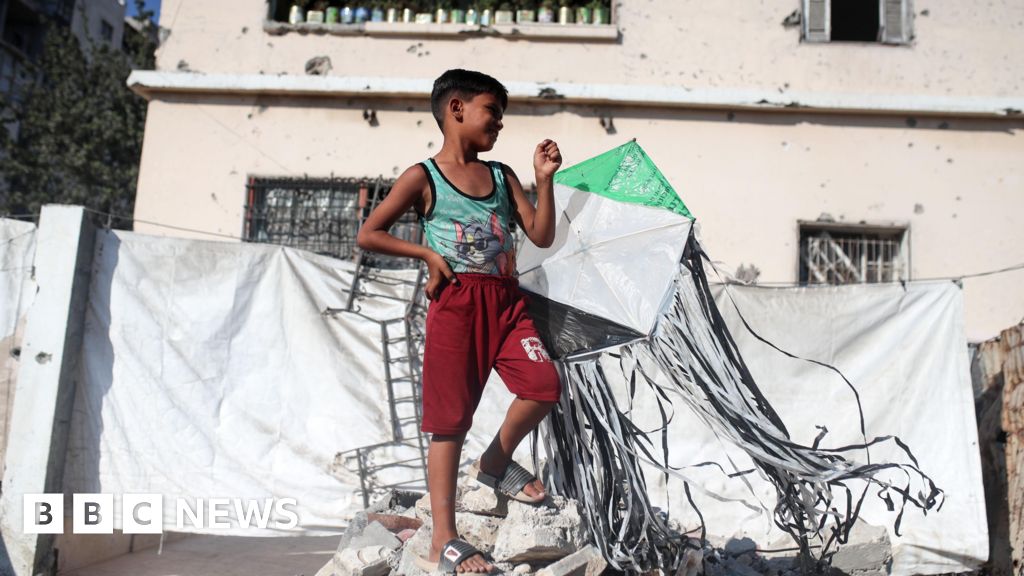
Hamas recently claimed that the kites discovered in Israeli border areas were released by children in Gaza. This assertion has added another layer to the complex dynamics of the ongoing conflict and raised questions about the role of youth in these distressing circumstances.
Understanding the Context of Kite Launchings
The use of kites as a form of protest or expression has a long history in various cultures. In the current conflict between Hamas and Israel, these kites are not merely recreational; they serve as symbols of both resistance and the tragic involvement of children in warfare. When children are encouraged or compelled to participate in activities that engage with conflict, it spotlights the broader implications of their circumstances. Hamas’s statement that these kites were launched by children in Gaza emphasizes the manipulation of youth as pawns in a larger struggle, often driven by socioeconomic hardships and political instability.
The Impact on Israeli Border Communities
The kites launched from Gaza into Israeli territory have repeatedly raised alarms in border communities. Some kites were equipped with incendiary devices, leading to fires and damage in agricultural areas. This has created a volatile environment for residents, who live under the constant threat of these aerial objects. The psychological toll on these communities cannot be underestimated. Children and families are forced to live in a state of anxiety, aware that a seemingly innocent kite can transform into a tool of destruction. The repercussions affect not only physical safety but also societal wellbeing, as fear permeates daily life.
The Role of Children in War
Children being involved in conflict presents a profound ethical dilemma. The Gaza Strip, characterized by poverty and limited resources, often sees children exposed to the harsh realities of war from a young age. The normalization of violence and conflict can lead to a cycle where involvement in hostilities becomes commonplace. This situation raises critical questions about the responsibilities of both local leaders and international communities. How can societies protect children from being exploited in conflict scenarios? Effective intervention strategies are needed to ensure that young individuals can have a future beyond warfare.
The Broader Implications for Conflict Resolution
The situation underscores the need for dialogue and understanding in efforts toward conflict resolution. As long as children are involved or exploited in such confrontations, achieving lasting peace remains a daunting challenge. Focusing solely on military solutions fails to address the root causes of conflict, including socioeconomic disparity, lack of education, and inadequate opportunities for youth. Meaningful engagement with both Gaza’s and Israel’s communities is essential for creating pathways to peace. By focusing on the welfare of children and providing them with constructive opportunities, a foundation for reconciliation can be layed.
In summary, the involvement of children in the ongoing conflict is a tragic example of how warfare permeates even the most innocent aspects of life. The narratives surrounding kite launching reveal the intricate ties between youth and conflict, emphasizing the need for comprehensive strategies aimed at protecting vulnerable populations and fostering long-term peace. Both sides must confront these realities to pave the way for a future where children can thrive without the shadow of war looming over them.