
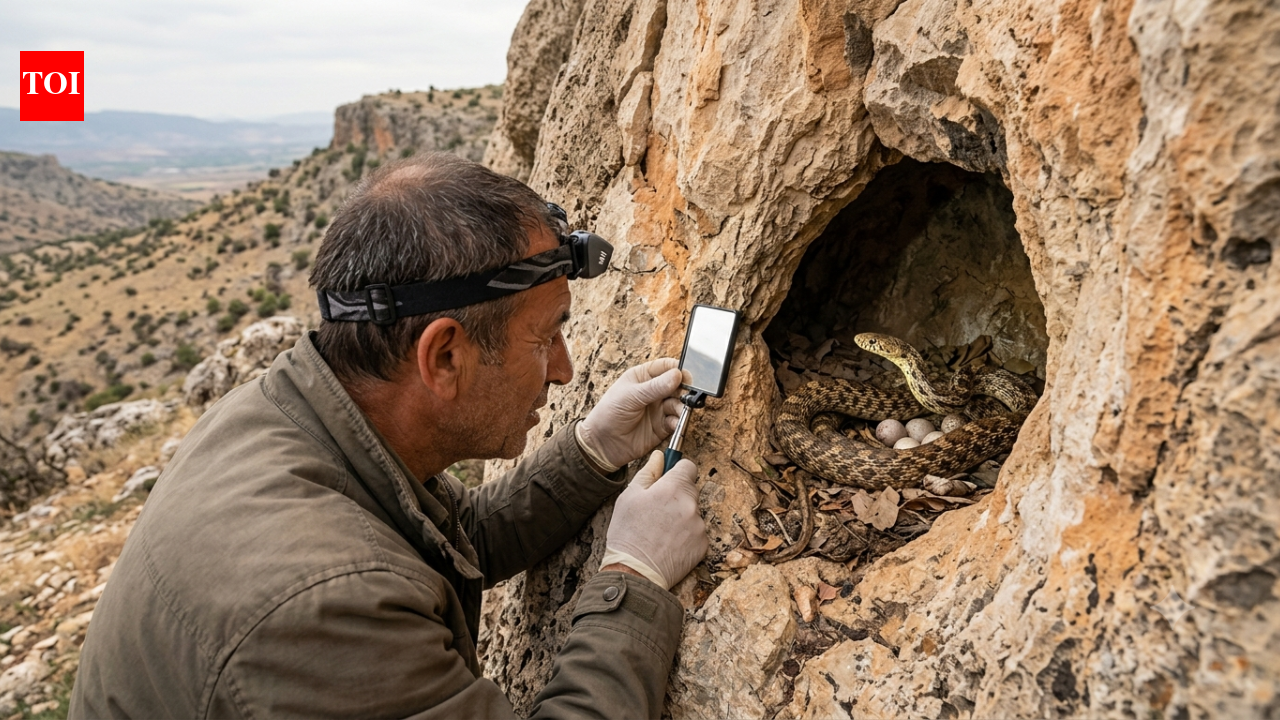
In a fascinating exploration of avian behavior, researchers have uncovered a surprising relationship between Eurasian scops owls and worm snakes in Türkiye. By inspecting nests over six breeding seasons, they found live worms snakes in 44% of the occupied nests. This unexpected encounter not only raises questions about the ecological role of these snakes but also suggests a potential benefit for the young owls.
Worm Snakes: An Unlikely Nest Companion
The study highlights the intriguing relationship between the Eurasian scops owl (Otus scops) and the worm snake (Xerotyphlops vermicularis), a burrow-dwelling species that predominantly feeds on small invertebrates. Snakes were repeatedly found in active owl nests rather than empty boxes. This notable pattern suggests that the owls might be bringing the snakes into their nests while still alive, a behavior that diverges from typical predation practices where prey is consumed rather than stored.
This unusual association has led researchers to ponder the benefits of having snakes coexist in owl nests. Although owls generally bring food back for their chicks, in this case, the snakes do not appear to serve as a food source. Instead, they contribute to the environment by moving through nesting material that could host various insects and larvae.
The Role of Snakes in Nest Survival
The presence of worm snakes might significantly impact nest conditions, as they thrive in burrowing environments laden with insects like ants and fly larvae. These snakes could potentially help to regulate invertebrate populations within the nest. The data from the study indicate that nests containing snakes had a notable survival advantage, with 61% of chicks fledging compared to only 29% from nests without snakes.
While these findings do not conclusively prove that the presence of snakes directly correlates with higher fledging rates, the substantial difference piques interest. It’s plausible that the snakes help to manage insect populations that could otherwise affect the development and health of the chicks, creating a more favorable environment.
Understanding the Complex Dynamics
Despite the promising observations, the reasons behind the owls bringing live snakes into their nests remain a mystery. It’s possible that the snakes benefit from the nesting environment, which offers warmth and access to food, while any advantages to the owls might come as a byproduct rather than a primary intention. Additionally, researchers have speculated that owls may occasionally catch these snakes for food but fail to consume them, thus unintentionally keeping them alive in the nest.
This complex interaction raises questions about the nature of animal behavior and ecological partnerships. The relationship observed in this study parallels similar phenomena around the world, where birds have been seen introducing live, non-venomous snakes into their nests without consuming them. This pattern suggests that unexpected ecological interactions may be more common than previously thought.
In conclusion, the relationship between the Eurasian scops owl and the worm snake underscores a vital aspect of avian ecology—how unexpected interactions can contribute to the survival of species. As researchers continue to uncover the intricacies of these relationships, it becomes increasingly clear that nature often hides fascinating connections waiting to be explored.